Wood, Waiting, and Altitude: Inside Our Barrel-Aging Program
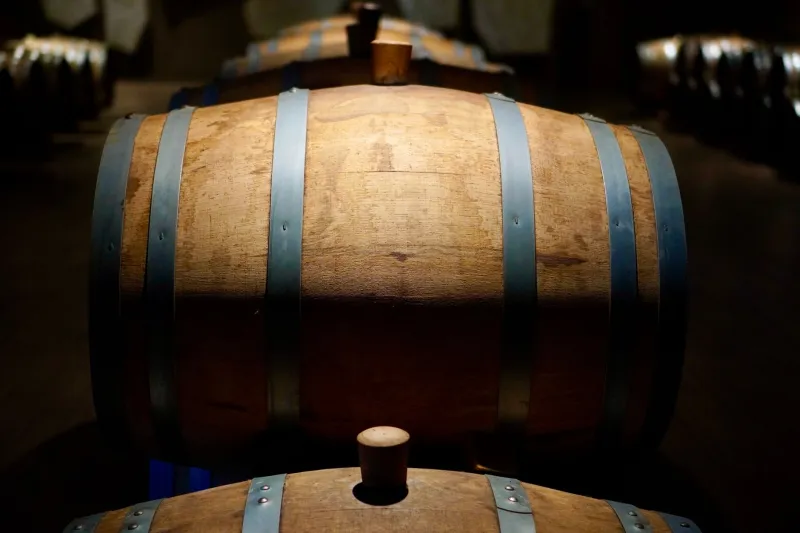
There's a corner of our brewery that moves slower than the rest. No clanging tanks, no rushing hoses, no timers counting down. Just rows of barrels stacked quietly in the dark, doing something that no amount of technical wizardry can speed up: aging.
Our barrel program has been one of the most talked-about parts of what we do here at Roaring Fork Beer Co., and honestly, it's also the part we're most protective of. Not because we're secretive — we love talking about this stuff — but because it took us years of trial, error, and a few genuinely heartbreaking losses to get it right. And "right" is still a moving target.
So let's pull back the curtain a little.
Why Barrels in the First Place?
Craft brewers started chasing barrel aging in earnest about two decades ago, borrowing a tradition that distillers and winemakers had been using for centuries. The premise is simple: wood is porous, and over time, beer breathed through that wood picks up flavors, loses harsh edges, and develops a depth that you just can't engineer any other way.
But simple premise, complicated execution.
Our head brewer, Caitlin Marsh, has been running the barrel program here since we relaunched the brewery. She describes the process with a mix of scientific precision and something close to reverence. "You're not just adding flavor," she says. "You're creating conditions for a conversation between the beer and the wood. The beer changes the barrel, and the barrel changes the beer. You're kind of just the person who introduces them and then gets out of the way."
That's the philosophy. The science is a little more involved.
Choosing the Right Wood
Not all barrels are created equal, and the type of wood — and what lived in that barrel before — shapes everything about the final product.
We work primarily with American white oak, which is the most common choice in the industry and for good reason. It's tight-grained, relatively consistent, and imparts those classic vanilla, caramel, and toasted wood notes that play beautifully with darker, malt-forward beers. Our imperial stouts and barleywines tend to spend time in ex-bourbon barrels sourced from Kentucky distilleries, and the whiskey residue left behind does a significant amount of flavor work on its own.
But we also experiment. We've run batches through ex-wine barrels — cabernet and chardonnay casks from Colorado and California — which add a tannic, fruit-forward complexity that works especially well with our sour and wild ale programs. Last year we got our hands on a small lot of ex-rum barrels from a Caribbean producer, and the results were genuinely surprising. That release sold out in under two hours at the taproom.
"Every barrel has a history," Caitlin explains. "When we get a new shipment, I smell every single one. You can tell a lot about what a barrel is going to give you just by putting your nose in it."
The Altitude Factor
Here's where things get interesting — and where brewing in the Rockies creates challenges that most barrel-aging guides don't account for.
At our elevation, temperatures swing dramatically between seasons. Summer afternoons can push into the 90s; winter nights regularly drop well below freezing. That thermal cycling affects barrels in ways that brewers at sea level simply don't deal with at the same intensity.
When temperatures rise, the beer expands and pushes deeper into the wood. When temperatures drop, it contracts and pulls back, bringing extracted compounds with it. This in-and-out movement is actually one of the mechanisms that accelerates flavor development — but at altitude, the swings are bigger and faster, which means the process is less predictable.
"We've had barrels that were ready in eight months that we expected to need eighteen," Caitlin says. "And we've had others that just sat there and didn't do much for over a year. You learn to check constantly and not assume anything."
There's also the evaporation issue. Distillers call it the "angel's share" — the portion of liquid that evaporates through the wood over time. At altitude, with lower atmospheric pressure and drier air, we lose more volume than a brewery at sea level would. That's beer we'll never get back. It's a real cost. But the concentration that results from that evaporation? That's part of what makes the finished product so intense.
The Chemistry Happening Inside
Without getting too deep into the weeds, here's a quick sketch of what's actually going on inside those barrels.
The wood contains compounds called lactones, tannins, lignin, and hemicellulose. As beer interacts with the wood, heat and time break these down into flavor-active molecules — vanillin (yes, vanilla flavor), guaiacol (smoke, spice), and furfural (almond, caramel) among others. Residual sugars and alcohol from previous occupants — bourbon, wine, whatever — also leach back into the beer, adding layers that weren't there before.
Meanwhile, if there's any residual yeast activity, slow fermentation continues inside the barrel, gradually chewing through remaining sugars and producing esters and acids that add fruity, funky, or tart notes depending on the strain.
All of this is happening simultaneously, at different rates, influenced by temperature, humidity, the specific history of the barrel, and the composition of the base beer. It's not chaos — there's real science here — but it's not a recipe you can follow step by step either. It requires constant tasting, note-taking, and judgment calls.
What We've Learned the Hard Way
Not every barrel ages gracefully. We've pulled batches that were oxidized beyond saving. We've had barrels develop off-flavors from bacterial contamination that we couldn't catch in time. We've blended barrels that we thought would harmonize and ended up with something muddy and confused.
Caitlin is candid about the losses. "It's part of the program. You can minimize risk, but you can't eliminate it. Every failure teaches you something specific that you carry forward."
One of the biggest lessons: base beer quality is everything. Barrel aging doesn't fix problems — it amplifies them. A beer with a rough, harsh malt profile going into the barrel will come out with a rough, harsh, now-also-oaky profile. We've learned to be more selective about what we put in, which has made the whole program more intentional and, ultimately, better.
What's Coming Next
We're not ready to announce specifics yet, but we have a few releases aging right now that we're genuinely excited about. There's a bourbon-barrel imperial stout that's been sitting for fourteen months and is starting to show something really special. We've also got a small-batch wild ale in wine barrels that Caitlin describes as "somewhere between a Flemish red and something we've never tasted before" — which, honestly, is exactly the kind of thing we love hearing from her.
When they're ready, you'll hear about it here first, and at the taproom.
In the meantime, if you want to understand what barrel aging actually tastes like, come in and try the current rotation. We usually have at least one barrel-aged pour on at any given time. Ask whoever's pouring about it — they know this stuff, and they love talking about it almost as much as we do.