Thin Air, Bold Beer: The Fermentation Science Behind Brewing at 8,000 Feet
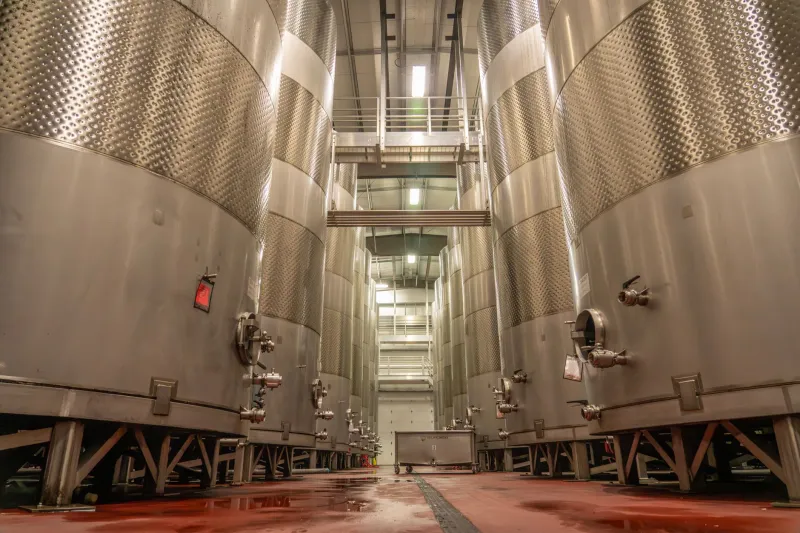
Most breweries worry about their grain bill, their hop schedule, maybe the pH of their mash. We worry about all of that too — and then we worry about atmospheric pressure. Brewing in the Roaring Fork Valley means contending with conditions that flatland brewers simply never encounter, and the science behind those conditions is a lot more interesting than most people realize.
Here's the short version: at roughly 8,000 feet above sea level, the rules change. Yeast behaves differently. Carbonation calculates differently. Even the boil point of water shifts. The long version is what we've spent years figuring out, one batch at a time.
What Happens to Yeast When the Air Gets Thin
Yeast are living organisms, and like most living things, they respond to their environment. At high altitude, the reduced atmospheric pressure creates conditions that subtly but meaningfully alter yeast metabolism during fermentation.
One of the biggest factors is dissolved oxygen. During the initial aerobic phase of fermentation — before yeast switch into full alcohol-producing mode — they need oxygen to synthesize sterols and unsaturated fatty acids, which are critical for healthy cell membrane development. At altitude, oxygen solubility in liquid is slightly reduced, which means yeast can struggle to absorb enough O2 during that crucial early window. Underpitched oxygen leads to stressed yeast, and stressed yeast produce off-flavors: fusel alcohols, excess esters, and a general muddiness that no amount of dry-hopping can fix.
Our solution has been to dial in our oxygenation process with a precision that most sea-level breweries simply don't need. We use inline oxygen dosing at specific rates calibrated for our elevation, and we monitor dissolved oxygen levels more aggressively than the textbook recommends. It sounds fussy, but it's the difference between a clean fermentation and a batch that tastes like it was brewed in a hurry.
The Boiling Point Problem
Water boils at 212°F at sea level. Up here, it boils at closer to 194°F. That gap might seem trivial, but it has real consequences for brewing chemistry.
The boil is where a lot of important things happen: proteins coagulate and drop out of solution, DMS (dimethyl sulfide, a compound that creates a cooked-corn flavor) volatilizes off, and hops isomerize to contribute bitterness. A lower boiling temperature means all of these processes happen more slowly and less completely.
DMS is the one that gets brewers into trouble most often. To drive it off adequately at our elevation, we extend our boil times beyond what most brewing textbooks prescribe, and we keep the kettle uncovered for a longer portion of the boil to maximize evaporation. We also pay close attention to our wort cooling rate, because DMS can reform in hot wort that sits too long before chilling.
The lower boil temperature also affects hop utilization — the efficiency with which alpha acids isomerize into the iso-alpha acids that give beer its bitterness. We've had to recalibrate our hop additions using altitude-adjusted utilization figures, which means our recipes look different on paper than they would if we were brewing in Denver, let alone Chicago.
Carbonation Physics at Altitude
Once fermentation is complete, there's another wrinkle: carbonation behaves differently when atmospheric pressure is lower.
Beer carbonation is typically measured in volumes of CO2 — the amount of carbon dioxide dissolved in a given volume of liquid. That dissolved CO2 is held in solution partly because of pressure. At altitude, the ambient pressure pushing down on a keg or serving vessel is lower, which means CO2 wants to escape from solution more readily. The practical result is that beer poured at altitude can appear over-carbonated — foamy, gassy, and hard to pour cleanly — even when it's carbonated to perfectly normal levels by volume.
We manage this through our serving pressure calibration. Our draft lines are set to account for the reduced ambient pressure, and we've worked with our taproom equipment to find the right balance between keeping CO2 in solution and serving a beer that pours with a proper head rather than a glass full of foam. It's an ongoing calibration, and it shifts slightly with seasonal temperature changes inside the taproom.
For our canned and bottled products, we've adjusted our target carbonation volumes slightly downward to account for the fact that consumers in the valley are opening those cans at the same elevation where we brewed them. If you take a six-pack down to Phoenix, your beer might taste a touch flatter than it does up here — that's physics, not a quality issue.
Turning Obstacles Into Advantages
All of this sounds like a lot of problem-solving, and it is. But here's the part we find genuinely exciting: the constraints of high-altitude brewing have pushed us to develop techniques and a level of process precision that directly improves our beer, full stop.
Because we have to monitor dissolved oxygen so carefully, we catch fermentation problems earlier than most small breweries. Because we've had to recalibrate our hop additions, we've developed a more nuanced understanding of how different hop varieties behave across a wide range of utilization rates. Because we've wrestled with carbonation physics, our draft system is dialed in tighter than it would ever need to be at sea level.
There's also something happening with the yeast strains themselves. Over time, repeatedly fermenting with the same house strains in high-altitude conditions has subtly selected for yeast that perform well in our specific environment. We can't claim to have bred a proprietary altitude-adapted strain — that would take generations of selective propagation beyond what we do in-house — but we do believe our house cultures have acclimated in ways that contribute to the character of our beers.
What It Means for What's in Your Glass
When you pull up a stool at the taproom and order a pint, you're drinking something that couldn't be made the same way anywhere else. Not because of marketing, but because the physics and biology of where we brew have shaped every decision from recipe formulation to the pressure on our draft lines.
The mountain isn't just scenery. It's a collaborator — a demanding, occasionally frustrating one that has made us better brewers than we'd be if we'd set up shop at a lower zip code. We've learned to read the altitude the way a baker learns to read humidity, adjusting and compensating until the variables that once felt like obstacles start to feel like home.
Next time you're in, ask your bartender about what's fermenting in the back. Odds are there's a batch in there right now that's teaching us something new about what it means to brew at the top of the world.