Why the Best Brewers in America Keep Ending Up in Our Valley
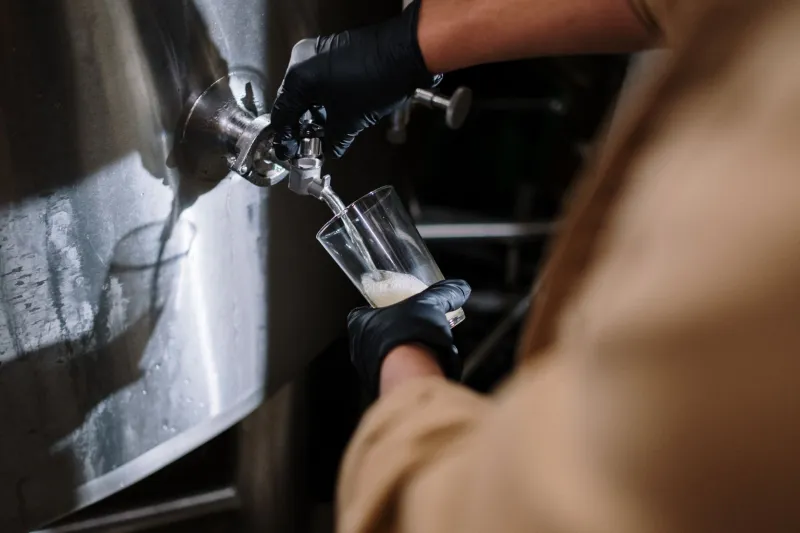
Sam Kowalski grew up in Milwaukee. He trained in Portland. He spent three years refining his craft at a well-regarded production brewery in Asheville, North Carolina, where the tap handles were famous and the waiting list for head brewer positions stretched longer than a Colorado summer afternoon. So when he told his colleagues he was leaving for a small mountain town in Colorado — one most of them had to Google — the reaction was predictable.
"They thought I was chasing powder days," Sam says, laughing from behind the bar at Roaring Fork Beer Co.'s taproom. "And honestly? That wasn't nothing. But it wasn't the whole story."
Sam joined our brewing team two years ago as an assistant brewer. He's now one of the lead voices in our seasonal program. His story isn't unique around here.
A Different Kind of Talent Magnet
Craft brewing is a brutally competitive industry, not just in the glass but in the labor market. The best brewers in America have options — big production facilities in major cities, marquee names in established beer towns, or the entrepreneurial gamble of going independent. Against that backdrop, a mountain brewery in a valley of roughly 80,000 people might seem like an unlikely destination.
And yet, over the past several years, Roaring Fork Beer Co. has quietly become exactly that. Our brewing team includes people who came from Denver, San Diego, Vermont, and even a couple of spots overseas. They didn't stumble here by accident. They came with intention, drawn by a combination of things that's harder to manufacture than a good IPA recipe.
"The reputation of a brewery matters more than people outside the industry realize," says Jordan Fife, a Colorado native who worked at two different operations on the Front Range before making the move to the valley. "When brewers talk about where they want to work, they talk about the culture, the freedom to experiment, and whether leadership actually listens. Roaring Fork kept coming up in those conversations."
What the Mountains Demand — And What They Give Back
Brewing at altitude isn't a marketing hook. It's a genuine technical challenge that, once you've wrestled with it, changes how you think about fermentation forever. The reduced atmospheric pressure, the mineral-rich local water, the wild temperature swings between seasons — all of it demands a brewer who stays curious and adaptable rather than relying on formulas that work at sea level.
For a certain kind of brewer, that's not a deterrent. It's the whole point.
"I wanted to be in a place where the environment was actually part of the beer," says Mira Okonkwo, who relocated from a large contract brewery in Chicago. "In a big city facility, you're controlling everything to death. Here, you're in a conversation with the place. The water, the altitude, the seasons — they all have opinions."
Mira joined our team specifically to work on our lager program, a notoriously demanding discipline that rewards patience and precision. She describes the Roaring Fork Valley as a kind of finishing school for brewers who already have the technical foundation but want to develop a more intuitive feel for the craft.
The Training Ground Reputation
Word travels fast in the brewing industry, which is smaller and more tightly networked than outsiders assume. A recommendation from the right person at a craft brewing conference can send a dozen resumes to your inbox inside a week. The inverse is also true — a culture that stifles creativity or burns through junior staff doesn't stay a secret for long.
Roaring Fork Beer Co. has spent years building a reputation for the opposite. Junior brewers here are expected to pitch ideas. Experimental batches aren't just tolerated; they're built into the schedule. When something goes sideways — and in brewing, something always goes sideways — the debrief is about learning, not blame.
"I've worked places where you didn't ask questions because it made you look like you didn't know something," says Sam. "Here, not asking questions is the weird thing. Everybody's curious all the time. That's infectious."
That environment has produced something of a pipeline effect. Brewers who trained here have gone on to open their own operations in Carbondale, Basalt, and beyond. Rather than treating that as poaching, we've come to see it as a feature. The valley's broader craft beer scene gets stronger, and Roaring Fork's reputation as a place that develops real talent gets more established with every person who graduates through our doors.
Life in the Valley Seals the Deal
It would be dishonest to pretend the mountains don't help. They absolutely do. The Roaring Fork Valley offers a quality of life that's genuinely difficult to replicate — trail access, skiing, a tight-knit community, and a pace that doesn't grind you down the way a major metro can. For brewers who are already working long, physical shifts on their feet, coming home to this landscape matters.
"I took a pay cut to come here," Jordan admits, without any apparent regret. "But I also stopped spending forty-five minutes in traffic every day. I hike three times a week. My blood pressure is probably different. It's a trade-off that makes total sense to me."
The cost of living in the Roaring Fork Valley is a real conversation, and we don't pretend otherwise. But for brewers at a certain point in their careers — people who've already proven themselves and want to build something meaningful rather than just collect a paycheck — the calculus tends to work out.
What This Means for the Beer
All of this people-talk eventually circles back to what ends up in the glass. A brewing team that's engaged, technically strong, and genuinely invested in the place they're working produces beer that reflects all of that. The curiosity shows up in the seasonal rotations. The technical depth shows up in the consistency of our flagships. The connection to the valley shows up in the ingredients, the collaborations with local farmers, and the conversations that happen at the bar between the people who made the beer and the people drinking it.
Sam puts it simply: "The best beer I've ever made, I made here. I don't think that's a coincidence."
Neither do we.