Anchor in the Storm: How a Craft Brewery Helped Hold a Mountain Town Together
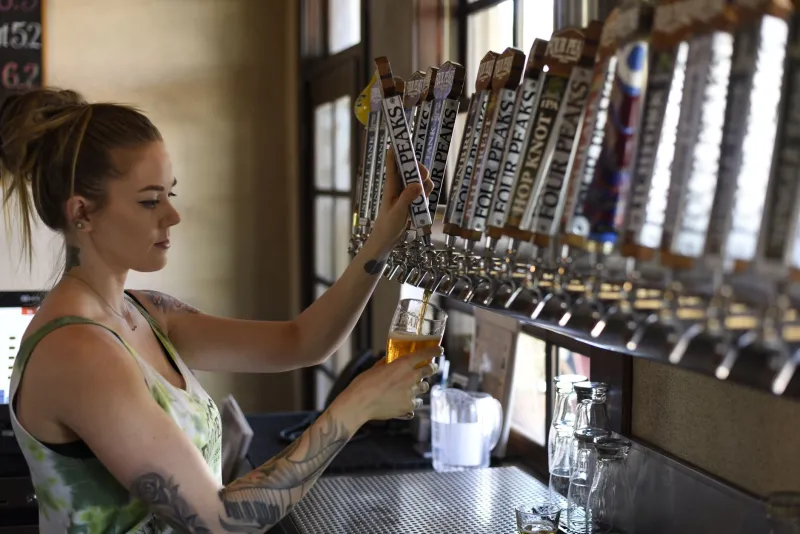
There's a version of the post-pandemic story that gets told a lot — the one about restaurants that didn't make it, storefronts that went dark, and mountain towns that lost their footing when the tourists stopped coming. That story is real. But in the Roaring Fork Valley, there's another story running alongside it, one that involves cold pints, a stubborn refusal to close, and a taproom that quietly became the valley's living room when everything else shut down.
Craft breweries don't usually get cast as economic heroes. But spend a little time talking to the people who lived through the valley's roughest stretch, and a pattern starts to emerge. Roaring Fork Beer Co. didn't just survive the uncertainty — it leaned into it.
When the Valley Got Quiet
If you weren't here for it, it's hard to describe how strange the Roaring Fork Valley felt in those early months. The ski resorts closed mid-season. The restaurants emptied out. Hospitality workers — the backbone of any mountain town economy — suddenly had nowhere to go. The valley had weathered downturns before, but nothing quite like this.
"I remember driving down Main Street and thinking, this is a ghost town," says longtime Carbondale resident and restaurant owner Deb Hatcher, who runs a small breakfast spot two blocks from the taproom. "The silence was the worst part. You didn't know how long it was going to last."
For a lot of small businesses, the answer to that question turned out to be: longer than they could hold on. But breweries, with their production side and their ability to pivot to canned and packaged product, had a structural flexibility that pure hospitality businesses didn't. Roaring Fork Beer Co. leaned hard on that advantage — keeping the production line moving, getting beer onto grocery shelves, and maintaining a skeleton crew when other employers were laying people off entirely.
Jobs as a Stabilizer
It sounds like a small thing. A handful of jobs at a brewery. But in a valley where the economic ecosystem is tightly interconnected, keeping people employed has a multiplier effect that's hard to overstate.
Dr. Lena Vasquez, an economist at Colorado Mountain College who has studied rural economic resilience, puts it plainly: "In small mountain communities, you don't have the economic diversity to absorb shocks the way Denver or Boulder can. When you lose a few dozen jobs, you feel it immediately — in rent payments, in grocery spending, in whether the hardware store stays open. Anchor businesses that hold their workforce together during downturns are genuinely critical."
Roaring Fork Beer Co. didn't just hold its workforce — it found ways to expand its footprint. Curbside pickup, expanded distribution, and a community-supported beer subscription model that launched almost overnight kept revenue flowing and kept staff on payroll. "We weren't sure if any of it would work," admits one longtime employee who's been with the brewery since its early days. "But we just kept moving. You run out of road if you stop."
The Taproom as Mental Health Infrastructure
Here's something that doesn't show up in economic impact reports: what it meant to people just to have somewhere to go.
When the taproom reopened — cautiously, with outdoor seating and reduced capacity — the response from the community was something nobody on staff had quite anticipated. People weren't just coming for the beer. They were coming because they needed to be around other humans. They needed to hear familiar voices, see familiar faces, and feel like the world was still turning.
"I'm not overstating this," says Marcus Tellez, a contractor who's been a regular at Roaring Fork for years. "There were weeks where coming to the taproom on a Friday afternoon was the only time I felt normal. My kids were doing school from home, my work had dried up, and I was going a little crazy. Just sitting outside with a pint and talking to people — it mattered more than I can explain."
Local therapists and community health workers have noted informally that third places — the term sociologists use for gathering spots that aren't home or work — played an underappreciated role in the valley's mental health during an extended period of social isolation. Breweries, with their inherently communal design and low-pressure atmosphere, were well-positioned to fill that role.
"A good taproom doesn't require anything of you," says Dr. Vasquez. "You can sit alone, or you can talk to strangers. You can stay for one beer or three. There's no agenda. That kind of space is genuinely valuable for community wellbeing, and we don't have nearly enough of it in most American towns."
Tourism Recovery and the Brewery Beacon
As the valley started to cautiously reopen, another dynamic emerged. Visitors who had been cooped up for months were hungry for authentic, local experiences — and craft breweries checked every box. They were local, they were story-rich, they offered something you genuinely couldn't get anywhere else.
Roaring Fork Beer Co. became one of the first stops on what locals started calling the "valley reboot tour" — a loosely organized circuit of small businesses that visitors were actively seeking out as a way to support communities that had struggled. The taproom's location, its reputation for quality, and the warmth of its staff made it a natural anchor point for visitors trying to figure out where to start.
"We saw people coming in who were very intentional about where they spent their money," says Deb Hatcher, whose breakfast spot saw a noticeable uptick in traffic that she partly attributes to the brewery's gravitational pull on the block. "They'd come here for lunch, walk over to the taproom, ask the bartender where else to go. That's how foot traffic works in a small town — one good anchor pulls everything around it."
What the Valley Learned
If there's a lesson in all of this, it's probably something that small-town planners and economic development folks have been trying to articulate for years: community institutions matter, and they don't always look the way you expect.
Libraries and churches have long been recognized as anchors. Schools. Fire stations. But in the contemporary American small town — especially the kind of outdoor-recreation-driven mountain community that defines the Roaring Fork Valley — the local craft brewery has earned a place on that list. It employs people. It generates tax revenue. It attracts visitors. And it gives residents a place to be human together, which turns out to be more important than it sounds.
"I think the pandemic clarified something for a lot of people," says Dr. Vasquez. "The businesses that held communities together weren't always the biggest or the most obvious. Sometimes it was just the place that stayed open, kept the lights on, and made people feel like they belonged somewhere."
For the Roaring Fork Valley, that place poured its heart into every pint. And the valley noticed.
Come see what we've been building. The taproom is open seven days a week, and we'd love to pour you something cold. Find hours and events at roaringforkbeerco.com.