Altitude, Community, and Cold Pints: How Mountain Breweries Became the New Wellness Retreat
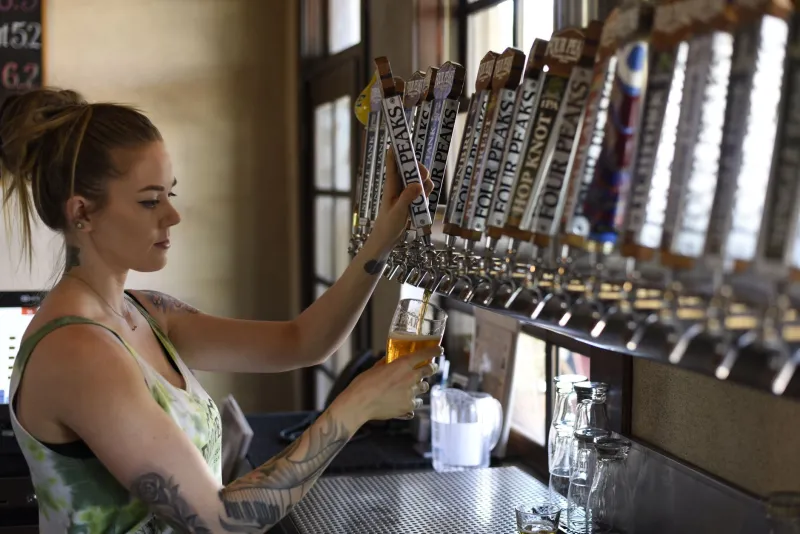
Something unexpected has been happening at the taproom on weekend afternoons. Between the trail runners still buzzing from a morning loop on the Hunter Creek trails and the cyclists who rolled in fresh off a climb up Independence Pass, there's a conversation unfolding that you might not expect to hear in a brewery. They're talking about recovery windows, electrolyte balance, and the mental reset that comes from sitting down with a cold, well-crafted beer after a hard day in the mountains.
Welcome to the new wellness destination. It doesn't have a meditation garden or a juice bar. It has sixteen taps and a view of the Elk Mountains.
The Shift Nobody Saw Coming
Wellness tourism has exploded across the United States over the past decade. What started as high-end spa retreats and yoga-focused resorts has quietly expanded into something far more democratic — and far more interesting. Mountain communities, with their built-in advantages of clean air, dramatic landscapes, and active cultures, have become magnets for travelers who want their vacations to feel restorative rather than just recreational.
Craft breweries, it turns out, fit right into that picture.
"I think people used to see a brewery visit and a wellness-focused trip as mutually exclusive," says Marnie Calloway, a registered dietitian based in Glenwood Springs who works with endurance athletes throughout the valley. "But the conversation has shifted. Especially up here, where the people walking through the door have just come off a fourteener or a fifty-mile bike ride. They're not drinking mindlessly. They're being intentional about it."
Calloway isn't anti-beer — far from it. She's one of several local health professionals who've started incorporating what she calls "social recovery" into the lifestyle guidance she gives her clients. The idea is simple: the act of slowing down, connecting with other people, and being present in a comfortable space has measurable benefits for stress reduction and mental health. A taproom, she argues, can be exactly that kind of space.
What Altitude Actually Does to the Equation
Brewing at elevation already changes the beer — we've written about that before, and anyone who's tasted the difference knows it's real. But altitude also changes the drinker, and that's a piece of the wellness puzzle that doesn't get talked about enough.
At 8,000 feet, your body is working harder just to exist. Hydration matters more. Your metabolism shifts. The effects of alcohol can feel more pronounced because your blood oxygen levels are already lower than they'd be at sea level. Visitors who arrive from Denver, Chicago, or the coasts often learn this the hard way on their first night.
The craft beer culture that's developed in high-altitude mountain towns has quietly adapted to this reality. Sessionable ales, lower-ABV lagers, and food-forward pairings have all grown in popularity here — not because drinkers are less interested in flavor, but because they're more attuned to how their bodies feel. There's a mindfulness baked into the mountain drinking experience that you don't always find elsewhere.
"I came up here for a trail running camp and honestly the taproom visits were part of what I planned," says Derek Osei, a runner from Atlanta who visits the valley twice a year. "I'm not trying to get hammered. I want to sit somewhere beautiful, drink something that tastes incredible, and decompress with people who just did the same hard thing I did outside. That's recovery. That's wellness. I don't care what you call it."
The Taproom as Third Place
Sociologists have long talked about the concept of the "third place" — the space that's neither home nor work, where community actually forms. In mountain towns, that role has increasingly fallen to the local brewery.
For visitors, it's the place where a solo traveler stops feeling like an outsider. For locals, it's where the seasonal rhythms of the valley get marked and celebrated. For everyone, it's a room where conversation happens more naturally than almost anywhere else.
That social dimension is something wellness researchers are paying more attention to. Loneliness and social isolation have been identified as significant public health concerns across the U.S., and the antidote — genuine, low-stakes human connection — is something a good taproom delivers almost automatically.
"There's a reason people leave these places feeling better than when they walked in, and it's not just the beer," says Calloway. "It's the conversation with the person next to you at the bar. It's the bartender who remembers what you ordered last time. It's belonging somewhere, even if you're just passing through."
Mindful Drinking in the Mountains
The mindful drinking movement — which encourages people to drink with intention, awareness, and moderation rather than habit or social pressure — has found a surprisingly natural home in craft beer culture. The very nature of a well-made craft beer invites you to slow down. There's complexity to notice, aroma to appreciate, a story behind the ingredients. You don't rush through it.
At Roaring Fork, we've seen this play out in how guests approach a tasting flight. People take their time. They ask questions. They want to understand what they're drinking and where it came from. That curiosity is the same instinct that drives someone to care about what they eat, how they train, and how they rest. It's all part of the same orientation toward living with a little more intention.
We've also noticed an uptick in guests who are cutting back on alcohol overall but still want to participate in the social and sensory experience of a brewery visit. Non-alcoholic options, low-ABV pours, and thoughtful food pairings have all become more important parts of what we offer — not as an afterthought, but as a genuine part of the experience.
What This Means for Mountain Town Brewing
None of this means breweries are becoming wellness centers. We're not installing infrared saunas or offering breathwork classes (though honestly, the view from the patio does something pretty similar). What it means is that the role of a craft brewery in a mountain community is broader and more layered than it might look from the outside.
Visitors are coming to the Roaring Fork Valley for the mountains, the trails, the air, and the sense that life can move at a different pace here. The taproom is part of that package — a place where the day's adventure gets processed, where strangers swap trail recommendations, where the physical and the social come together over something genuinely delicious.
If that's wellness, we'll take it. Pull up a stool.