Where Strangers Become Regulars: The Taproom as Colorado's New Town Square
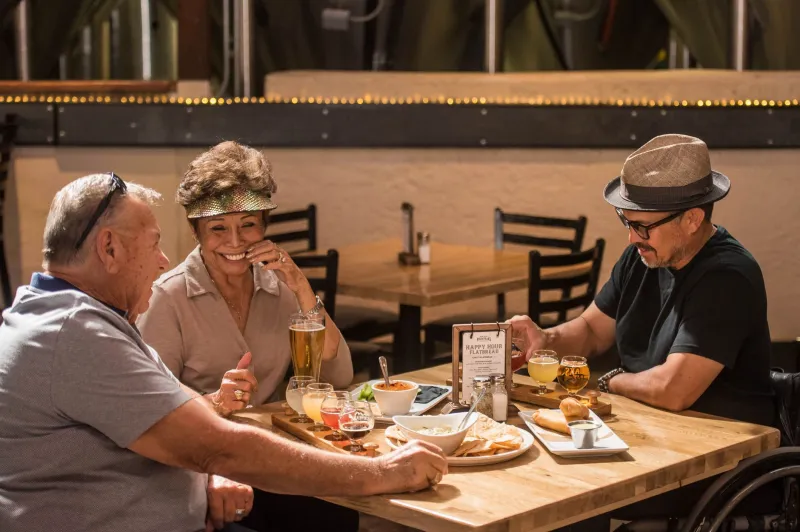
There's a moment that happens at Roaring Fork Beer Co. pretty much every weekend. Two people — maybe a ski-town transplant and a fourth-generation Carbondale local, maybe a retiree and a twenty-something snowboarder — end up side by side at the bar. One of them makes a comment about what's on tap. The other laughs. Twenty minutes later, they're deep into a conversation about the valley, about the mountains, about something that happened last Tuesday. Nobody planned it. Nobody had to.
That's the thing about a good taproom. When it's working the way it's supposed to, it doesn't feel like a venue or a brand experience. It feels like a neighborhood.
What Sociologists Call It, What We Just Call Tuesday Night
Urban researchers have a term for places like this: "third places." Not home (first place), not work (second place), but somewhere in between — a neutral ground where social hierarchies loosen up and people mix across the usual lines. Ray Oldenburg, the sociologist who coined the phrase back in the 1980s, argued that these spaces are essential to a functioning democracy. He had coffee shops and barbershops in mind. We'd like to think a well-run taproom fits the bill just as well.
The Roaring Fork Valley has always had its own version of this tension. It's a stretch of western Colorado that contains some of the wealthiest zip codes in the country right alongside working-class towns that have been here for generations. Aspen and Glenwood Springs are barely forty miles apart, but they can feel like different planets. The people who live here full-time, the people who own second homes, the people who come for a long weekend — they don't always find themselves in the same room. Until they walk through our door.
The Design Wasn't an Accident
When we laid out the taproom, we made some deliberate choices. Long communal tables instead of small two-tops. Bar seating that faces outward toward the room rather than inward toward a wall. A layout that makes it genuinely awkward to sit in isolation if the place has any kind of crowd going. None of this was accidental.
We also kept the TVs to a minimum. One screen, tucked in a corner, mostly for big games when the community wants to watch together — not as background noise that lets everyone stare at something other than each other. The idea was simple: if you're going to be here, be here.
The bar itself does a lot of work. There's something about a bar top — the way it creates a shared surface, the way it naturally orients people toward the person pouring — that encourages conversation in a way that a table in the corner just doesn't. Our bartenders are trained to introduce people, to mention that the guy two stools down just hiked the same trail you're talking about, or that the woman across the bar has been homebrewing for fifteen years and would love to talk about the dry-hop profile on our current IPA.
The Beer as a Conversation Starter
Here's something we've noticed over the years: beer itself is a remarkably democratic icebreaker. Nobody feels intimidated walking up to a tap list the way some people feel intimidated by a wine menu. You can ask a dumb question about what a saison is and nobody looks at you sideways. You can say you only like light lagers and you'll still get a warm welcome and a cold glass of something crisp.
The rotating taps help too. When the menu changes with the seasons — when we bring in a pumpkin ale in October or a dry-hopped wheat in July — it gives people something new to react to, to debate, to recommend to each other. "Have you tried the new amber yet?" is one of the easiest sentences in the English language to say to a stranger.
We've watched couples meet here. We've watched friendships form between people who couldn't be more different on paper. We've watched a local rancher and a tech worker from Denver spend two hours arguing about water rights and walk out as genuine acquaintances. The beer didn't solve anything. But it gave them a reason to sit down together long enough to find out they were both worried about the same river.
Regulars Are the Backbone
Any community space lives or dies by its regulars. Ours are a genuinely eclectic bunch. There's the retired schoolteacher who comes in every Thursday with a different neighbor in tow, determined to introduce someone new to the taproom every week. There's the construction crew that stops in after work on Fridays and occupies the same corner of the bar with the kind of comfortable authority that only comes from years of showing up. There's the hiking club that does their post-trail debrief over flights of whatever's new on the menu.
These people know each other's names. They ask about each other's kids. They argue about local politics with the kind of directness that's only possible when everyone in the room knows they'll be back next week. That continuity — that sense that this is our place — is what makes a third place work. You can't manufacture it. You can only create the conditions for it and get out of the way.
Why It Matters More Right Now
We're not going to pretend a taproom solves polarization. It doesn't. People walk out of here and go back to their separate corners of the internet and their separate news feeds and their separate versions of reality. We're not naive about that.
But we do believe that the hours spent in a room together — actually talking, actually laughing, actually sharing a table with someone whose life looks nothing like yours — those hours add up to something. They build a small, stubborn resistance to the idea that the person across the aisle is your enemy. They remind you that the valley you both love is the same valley, even if you disagree about everything else.
Roaring Fork Beer Co. started as a brewery. It turned into something a little more complicated and a lot more worthwhile. Come pull up a stool. The person next to you might surprise you.