Better Together: How Roaring Fork Brews With Friends Across the Mountain West
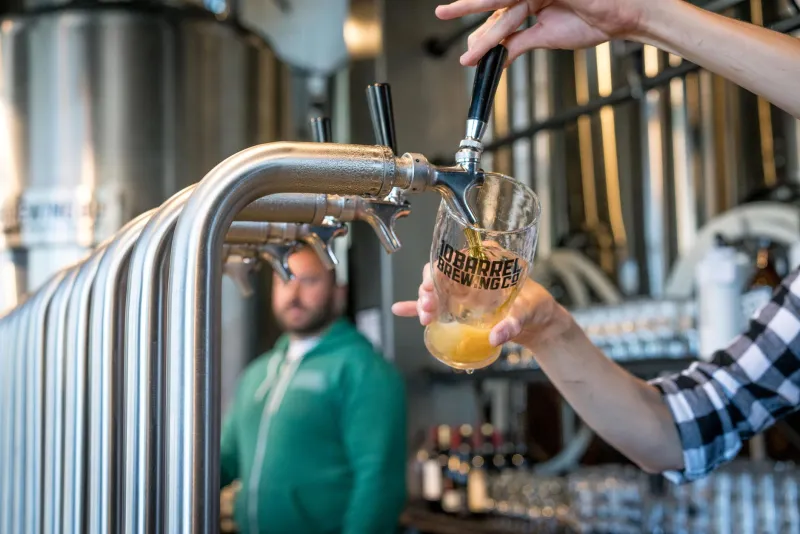
There's a moment in every collaboration brew day when things get genuinely weird — in the best possible way. Two brewing teams, each with their own habits and instincts, crowd around the same mash tun trying to agree on something. Hop additions. Water chemistry. Whether a dry hop at day four or day seven makes more sense. It's part creative session, part friendly argument, and entirely the reason we keep doing it.
At Roaring Fork Beer Co., we've built relationships with craft breweries all across the Rockies — from the Western Slope to the Front Range, up into Wyoming and down into New Mexico. And while every collab starts differently, they all tend to end the same way: with a beer neither brewery could have made on their own, and a friendship that's tighter than when we started.
Why Craft Brewers Collaborate in the First Place
The craft beer world has a reputation for being unusually collegial. Walk into almost any independent brewery in America and you'll find the brewer happy to talk shop — about their yeast strains, their local water profile, even the mistakes they made last season. That openness isn't accidental. It's baked into the culture.
For smaller regional breweries like ours, collaboration makes practical sense too. We're not competing for the same shelf space as the big guys. We're fighting for the same thing: a customer who cares about what's in the glass and where it came from. When a brewery in Durango or Fort Collins puts out a collab with Roaring Fork, both audiences pay attention. People who've never made it up to the Roaring Fork Valley suddenly have a reason to find us.
But honestly? The business logic is secondary. We do these projects because they make us better brewers.
How a Collaboration Actually Starts
Most of our collab conversations start the same way most good things do — over a beer. Sometimes it's at a festival. Sometimes it's a cold call that turns into a two-hour phone conversation about water chemistry and mountain terroir. Sometimes it's a mutual friend in the industry who says, "You two need to meet."
Once there's interest on both sides, we start talking about what kind of beer makes sense. That's where it gets interesting. We don't just pick a style and split the recipe down the middle. We try to find something that genuinely represents both breweries — a beer that would feel at home on both tap lists but couldn't have been made without the other team in the room.
For one recent project with a brewery out of Glenwood Springs, that meant leaning hard into locally sourced ingredients. They brought wild-harvested juniper berries. We brought our high-altitude water and a house yeast strain we've been cultivating for years. The result was a farmhouse ale that tasted like the landscape we both call home — piney, slightly earthy, with a dry finish that made you want another sip immediately.
The Creative Process: Friction Is the Point
Here's something we've learned: the best collabs have a little friction in them. When both teams agree on everything immediately, the beer usually ends up being fine but forgettable. When there's a real creative tension — one brewer pushing for more bitterness, the other pulling toward a softer malt backbone — that's when you get something genuinely surprising.
We had a collab with a lager-focused brewery from the Front Range that almost fell apart twice before we landed on the concept. They wanted to stay true to their clean, precise German-style roots. We wanted to push toward something wilder and more expressive. What we finally agreed on was a cold-conditioned ale that borrowed the lagering process but used an ale yeast that gave it just enough funk to feel alive. It sold out in eleven days.
That kind of outcome doesn't happen when everyone's just being agreeable.
What the Guest Brewer Experience Looks Like
When a partner brewery sends someone out to Aspen to brew with us, we try to make it an experience worth the drive. That means showing them what makes brewing at elevation genuinely different — the adjusted boil points, the way carbonation behaves, the specific character our local water lends to every batch. For brewers who've spent their careers at lower altitudes, it's often a revelation.
And we learn just as much going the other direction. Spending a day in someone else's brewhouse, working with their equipment and their team, has a way of shaking loose habits you didn't even know you had. You come home seeing your own process with fresh eyes.
Limited Release, Lasting Impact
Collaboration beers are almost always limited releases — a single batch, available for a few weeks at both taprooms and maybe a handful of accounts in between. That scarcity is part of what makes them special. People know they need to show up now or miss it.
But the impact sticks around longer than the beer does. We've had customers tell us they drove up from Denver specifically because they heard about a collab we were releasing. We've watched those customers come back on their own, no special release required. That's the real win — not just the beer itself, but the new relationship it creates between a brewery and a person who might not have found us otherwise.
The craft beer community thrives when breweries treat each other like teammates. In a market dominated by brands with marketing budgets that dwarf our entire annual revenue, the best thing independent breweries can do is show up for each other. Every collab we put out is a small, delicious argument for why that matters.
Keep an eye on our events page. The next one's closer than you think.