Small Numbers, Big Flavor: The Quiet Revolution of Sessionable Craft Beer in the Rockies
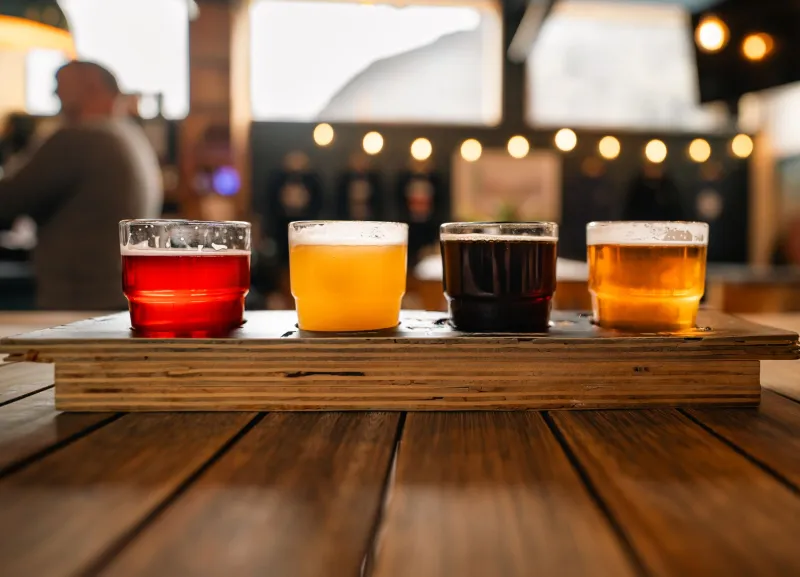
There's a running joke in craft beer circles that the easiest way to hide a mediocre brew is to crank up the alcohol. Pile on enough ABV and nobody notices the gaps. It's a shortcut, and most serious brewers will tell you so — usually while handing you something that clocks in right around 4.5%.
At Roaring Fork Beer Co., we've been paying close attention to a shift that's been building quietly for the past few years. The drinkers who walk through our taproom doors aren't always chasing the biggest, boldest imperial stout on the board. Increasingly, they're asking a different question: What can I drink two or three of and still feel like myself at the end of the afternoon?
That question, it turns out, is a lot harder to answer well than it sounds.
Why Brewing Low Doesn't Mean Brewing Less
Strip alcohol out of a beer and you've stripped out one of its primary carriers of aroma and flavor. Ethanol isn't just the thing that gets you tipsy — it's a solvent that binds to aromatic compounds and delivers them to your nose and palate in ways water simply can't replicate. Pull it back, and suddenly every other decision you make in the brewhouse gets amplified.
"There's nowhere to hide in a session beer," says our head brewer. "If your malt bill is lazy, you'll taste it. If your hop additions are off by ten minutes, you'll taste that too. The beer is transparent in a way that a 9% double IPA just isn't."
The challenge, then, is building complexity without leaning on alcohol as a crutch. That means obsessing over grain selection — using specialty malts like Munich, Vienna, and aromatic varieties to create body and depth that would otherwise come from a higher fermentation yield. It means timing hop additions with surgical precision, layering bitterness, aroma, and late dry-hop character to give the drinker something to think about from first sip to last. And it means working closely with yeast strains that contribute their own character: fruity esters, subtle spice, a clean finish that invites the next sip.
The Altitude Factor
Here's something that doesn't come up enough in the broader craft beer conversation: altitude changes how alcohol hits you. At elevation, your body absorbs alcohol faster, your blood oxygen is already slightly lower, and dehydration creeps up quicker than it would at sea level. What feels like a manageable pace at a bar in Denver can become a very different afternoon at 8,000 feet.
Roaring Fork Valley locals figured this out a long time ago. Visitors sometimes learn it the hard way.
For a community built around outdoor activity — hiking, mountain biking, skiing, river trips — the appeal of a beer that lets you stay social without wrecking the rest of your day is genuinely practical. Session beers aren't a compromise here. They're a lifestyle match.
"We think about the trail-to-taproom drinker a lot," our brewer notes. "Someone who just did ten miles above treeline doesn't necessarily want to be floored by a double IPA. They want something cold, flavorful, and refreshing — something that fits the day they just had."
What's Actually in the Glass
At Roaring Fork, our sessionable lineup covers a lot of ground, and that's intentional. The category shouldn't be a synonym for "light lager" — it should be a full spectrum of styles executed at a more approachable strength.
Our Watershed Session IPA sits at 4.3% but drinks like a beer that has no business being that low. We use a layered dry-hop strategy — adding hops at multiple points post-fermentation — to load up on tropical and citrus aromatics without the boozy backbone you'd expect to carry them. The result is a beer that smells like a full-strength West Coast IPA but finishes clean and light enough to pour a second round without a second thought.
On the malt-forward end of things, our Valley Pale Ale leans into biscuit and toasted grain character, with just enough hop bitterness to keep it honest. At 4.8%, it's the kind of beer that rewards slow drinking — something that actually gets better as it warms slightly in the glass.
And then there's our Confluence Kölsch-style ale, a perennial favorite that demonstrates how the German session tradition translates beautifully to Colorado. Crisp, subtly fruity, bone dry on the finish — it's a beer that disappears from the glass before you've noticed, and somehow that feels like a compliment.
The Culture Shift Behind the Pour
The rise of sessionable craft beer isn't happening in a vacuum. It's part of a broader reckoning in American drinking culture around mindful consumption — not abstinence, but intention. People are thinking more carefully about how alcohol fits into their lives, and they're demanding that lower-ABV options meet the same quality bar as everything else on the board.
For craft breweries, that's both a challenge and an opportunity. It's a chance to demonstrate that technical skill and creative vision matter more than raw fermentation output. It's a chance to reach drinkers who might otherwise opt out of a taproom afternoon because they've got a morning commitment the next day, or because they're driving, or because they simply don't want to feel wrecked.
At Roaring Fork, we see it play out in real time. Longer taproom stays. More flights that mix session and full-strength options. Groups of friends who settle in for three hours instead of one. The pacing changes, and honestly, the conversations get better.
The Hardest Beer to Brew Is the One You Underestimate
If there's one thing we want people to take away from our sessionable lineup, it's this: a 4.5% beer that's genuinely excellent represents more craft, more care, and more brewing intelligence than a lot of what gets celebrated in the high-ABV corner of the market.
The next time you're at the taproom and you find yourself scanning the board for something approachable, don't skip past the session options. Ask about them. Let us walk you through what went into the glass.
We think you'll be surprised how much is hiding in those small numbers.