Mineral Magic: What Makes Roaring Fork Water the Brewer's Secret Weapon
There's a conversation that happens in homebrewing forums and professional brew labs about once a week. Someone posts a water report, lists out their mineral additions — gypsum, calcium chloride, lactic acid — and asks the group whether they've finally cracked the code on replicating a specific regional beer style. The responses are always thoughtful, always technical, and almost always missing the same thing: you can approximate the numbers, but you can't bottle the context.
At Roaring Fork Beer Co., we think about water constantly. Not in an obsessive, clipboard-and-lab-coat way — more like the way a baker thinks about flour or a winemaker thinks about terroir. It's the foundation. And the foundation we're working with happens to be genuinely unusual.
What's Actually in the Water
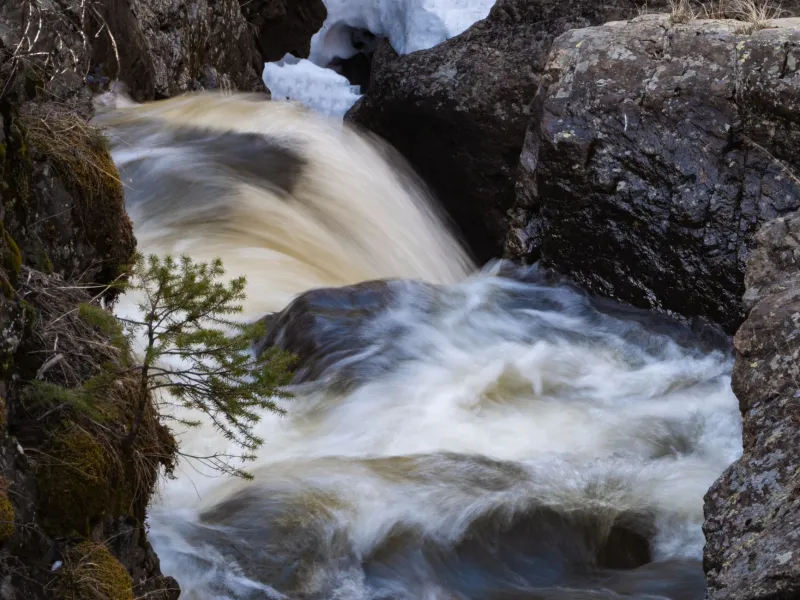
The Roaring Fork River originates near Independence Pass at roughly 12,000 feet and descends through some of the most geologically complex terrain in Colorado. By the time that snowmelt reaches us, it's traveled through granite, Mancos shale, and marine sedimentary deposits laid down when this whole valley sat beneath an inland sea. Each of those formations leaves a fingerprint.
We work with local hydrologist Dana Whitfield, who's been studying the Roaring Fork watershed for over a decade, to understand exactly what we're dealing with. According to Whitfield, what makes this water stand out isn't any single mineral — it's the ratio and stability of the whole mineral profile. "You've got moderate hardness, relatively low sulfate, and a bicarbonate level that sits in a sweet spot for certain malt-forward styles," she told us during a recent visit to the taproom. "It's the kind of water Burton-on-Trent brewers would have killed for in the 19th century — except it's naturally dialed in for a different set of styles."
For the technically curious: our source water typically comes in around 150–180 ppm total dissolved solids, with calcium hovering near 45–55 ppm, bicarbonate in the 80–100 ppm range, and sulfate sitting low — often under 30 ppm. The pH runs naturally between 7.2 and 7.6 depending on the season, which means we're doing minimal acid adjustments for most of our lagers and amber ales.
Why Brewers Try — and Struggle — to Copy It
Here's where it gets interesting for the water chemistry nerds out there. Brewers across the country have tried to reverse-engineer what we've got. The process usually starts with a reverse osmosis system — strip the water down to essentially nothing, then build it back up with measured mineral additions. It's a legitimate technique and it works well for many styles.
But there are a few things that approach can't quite nail.
First, the silica. Roaring Fork water carries trace amounts of dissolved silica from its granite origins that sit below most standard water reports but interact subtly with mouthfeel and head retention. It's not dramatic, but experienced tasters notice it. Second, the temperature at which this water arrives matters more than people expect. Snowmelt-fed water carries dissolved oxygen and gases at rates that differ from municipal supplies, and while those gases largely off-gas during the brewing process, they influence the early stages of mash chemistry in ways that are genuinely hard to simulate.
Third — and this is the one Whitfield keeps coming back to — is seasonal variation. "Your water in March looks different than your water in August," she says. "The spring runoff carries more suspended minerals. Late summer water is cleaner but harder. A brewer paying attention to that can actually use it as an ingredient."
We do exactly that. Our spring seasonal releases are timed partly around the character of the meltwater. It's not something we advertise loudly, but it's baked into how we plan the brewing calendar.
The pH Sweet Spot and Why It Matters for Flavor
One of the most practical reasons our water creates beers with a distinct character is that it naturally supports mash pH in the 5.2–5.4 range for most grain bills without aggressive acidification. That might sound like a small thing, but mash pH has an outsized effect on enzyme activity, fermentability, and ultimately the flavor clarity of the finished beer.
When mash pH runs too high, you get a harsh, astringent bitterness — the kind that makes a beer feel like it's coating your teeth. Too low and you lose body and get a thin, acidic finish. Right in that 5.2–5.4 window, malt flavors express cleanly, hop bitterness integrates rather than jabs, and fermentation tends to run more predictably.
For our lagers especially, this matters enormously. Lager brewing is an exercise in subtraction — there's nowhere to hide flaws. The clean, soft character of Roaring Fork water lets the malt and hop work speak without interference. Brewers in cities with heavily chlorinated or very high-bicarbonate municipal water spend significant time and chemistry trying to get to where we start.
Why People Actually Travel to Taste the Difference
We hear from visitors pretty regularly who've driven up from Denver, flown in from the coasts, or detoured off a ski trip specifically to drink beer made with this water. That might sound like marketing copy, but it checks out when you talk to them.
A lot of these folks are homebrewers or beer professionals who've spent time trying to replicate Colorado mountain brewing styles at home. They've read the water reports, bought the mineral packets, dialed in their systems — and still felt like something was slightly off. Coming to the source and tasting it fresh from our taps is, for a certain kind of beer enthusiast, a form of calibration. It's the reference point.
There's also something that happens when you drink a beer in the place it was made. The altitude, the dry mountain air, the fact that you drove through an aspen grove to get here — it's all part of the sensory experience. We're not going to pretend that's purely chemistry. But we'd also argue it's not purely psychological, either.
What We've Learned From the Water
After years of brewing with this watershed, the biggest lesson we've taken away is one of restraint. The temptation when you have interesting source water is to over-engineer around it — to treat it heavily and control every variable. We've found the opposite approach works better. We adjust minimally, we monitor seasonally, and we let the water tell us what it wants to make.
Some of our best beers came out of seasons when we leaned into the water's natural character rather than fighting it. Our dry lager, for instance, was practically designed by the late-summer water profile — lower mineral load, slightly softer, ideal for crisp attenuation without harsh edges.
The Roaring Fork Valley has been shaping things for a long time — landscapes, communities, agriculture. It's doing the same thing in our fermenters, one batch at a time. We're just paying close enough attention to let it.