Small Valley, Outsized Glory: The Forces That Made Roaring Fork a Craft Beer Powerhouse
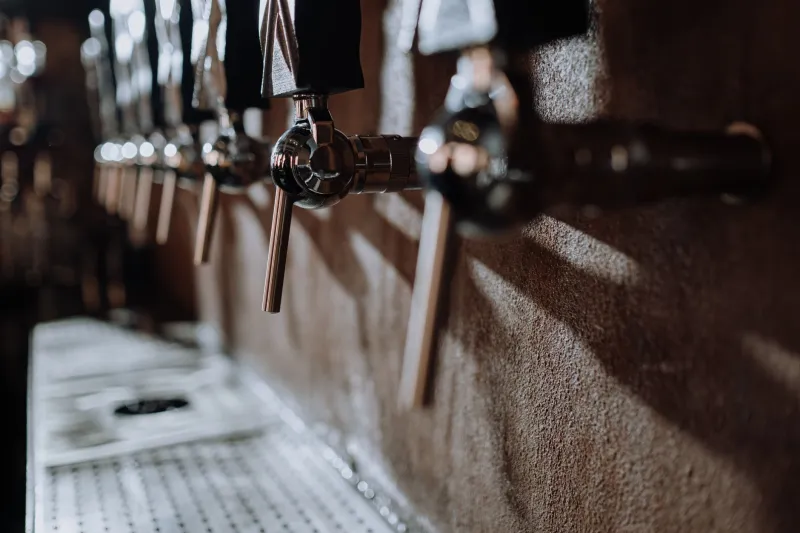
There's a moment that happens at nearly every major craft beer competition. The envelope opens, the region gets announced, and somewhere in a ballroom full of brewers from Portland, San Diego, and Chicago, a few heads turn and someone mutters, Roaring Fork again?
It happens enough that it stopped being a coincidence a long time ago.
The Roaring Fork Valley stretches roughly 70 miles through the central Colorado Rockies, threading together a string of mountain towns that most Americans know only as ski destinations. It's not a place you'd expect to find a disproportionate concentration of nationally recognized craft beer. And yet, here we are.
So what's actually going on? We spent time talking to brewers, competition judges, and a few people who study the business of craft beer for a living. The answer turns out to be less about any single factor and more about a specific collision of ingredients — literal and figurative — that's hard to replicate anywhere else.
The Water Conversation Starts Here
Every brewer in the valley will eventually bring up the water. It's almost a reflex at this point, but that doesn't make it any less true.
The Roaring Fork River and its tributaries drain snowmelt from some of the highest terrain in the contiguous United States. That water picks up a very specific mineral profile as it moves through granite and limestone geology — one that happens to be exceptionally well-suited to a wide range of beer styles. The mineral balance affects everything from hop bitterness perception to yeast behavior to the way malt sugars convert during the mash.
"You can move a recipe somewhere else and brew it with the same grain bill and the same hops and it just won't taste the same," said one longtime valley brewer who's watched colleagues try to replicate their flagship ales after relocating. "The water isn't magic, but it's doing a lot of quiet work that people don't always give it credit for."
Competition judges who evaluate blind — meaning they have no idea where a beer was brewed — have noted recurring characteristics in valley entries: a certain clarity of bitterness, a clean fermentation profile, a finish that doesn't linger in ways that fatigue the palate. Whether that's the water, the altitude, or something else entirely is genuinely hard to isolate. But the pattern shows up often enough that it's worth taking seriously.
Altitude as Ingredient
Brewing at elevation isn't just a talking point. It changes the physics of fermentation in ways that took valley brewers years to fully understand and, eventually, to use deliberately.
Lower atmospheric pressure affects how yeast behaves, how CO2 moves through fermenting beer, and how hop compounds volatilize during the boil. The result is a fermentation environment that's genuinely different from what you'd find at sea level — and one that rewards brewers who learn to work with it rather than against it.
The brewers who've been here longest tend to describe altitude as a constraint that became a competitive advantage. Early batches were unpredictable. Hop utilization was off. Carbonation was harder to dial in. But the brewers who stuck with it developed an intuitive understanding of their environment that's difficult to teach and impossible to fake.
"There's a learning curve that filters people," said one industry analyst who tracks regional craft beer performance. "The brewers who make it through that curve in a place like the Roaring Fork Valley tend to be exceptionally technically skilled, because they had to be."
A Community That Demands Quality
The valley's permanent population skews educated, well-traveled, and economically comfortable. That's not a cultural judgment — it's a market reality that shapes what local breweries have to produce to stay in business.
Roaring Fork Valley drinkers have been to Belgium. They've done the California brewery trail. They've had great beer in Denver, in Asheville, in Vermont. They know what good tastes like, and they'll tell you when something doesn't measure up. That consumer pressure — sometimes uncomfortable, always useful — has historically pushed valley breweries to operate at a higher baseline than markets where good beer is still a novelty.
"The taproom crowd here will ask your brewer technical questions," laughed one front-of-house manager at a valley brewery. "You better know your water chemistry if you're going to work the bar on a Saturday."
That level of engagement creates a feedback loop. Brewers who are pushed to explain and defend their choices become better at making them. The community's curiosity functions, in a weird way, like an ongoing quality control program.
The Talent Concentration Problem (That Became an Advantage)
One thing that surprised us in our conversations was how often people mentioned the density of skilled brewers in a relatively small geographic area — and how much informal knowledge-sharing happens as a result.
The valley's brewing community is competitive but not cutthroat. Head brewers from different operations know each other. They swap notes on yeast strains, troubleshoot fermentation issues together, and occasionally collaborate on beers that neither could have made alone. It's the kind of collegial environment that's harder to find in larger, more anonymized markets.
"When something goes sideways in the tank, I can call three people within ten miles who've probably dealt with the same problem," said one brewer who relocated to the valley from a larger metro market. "That doesn't happen everywhere. It speeds up your learning curve enormously."
This informal knowledge network, combined with the technical demands of high-altitude brewing, has created a concentration of genuinely skilled craftspeople in a place small enough that they actually interact with each other regularly. The result is something like a regional brewing intelligence — distributed, collaborative, and quietly formidable.
What the Awards Actually Measure
It's worth being honest about what competition medals do and don't tell you. They measure technical execution against a set of style guidelines, evaluated by judges who are themselves human and variable. They're meaningful, but they're not the whole story.
What the Roaring Fork Valley's consistent award performance actually signals, according to several competition judges we spoke with, is technical consistency at a high level. It's not luck. It's not marketing. It's brewers who understand their ingredients, their environment, and their process well enough to produce beer that reliably meets a very high standard.
"You can have a great batch once," said one judge who has evaluated entries from across the country. "Showing up in the results year after year across multiple breweries in the same region — that tells you something real is happening there."
Why It Matters Beyond the Medals
For those of us who live and brew in this valley, the national recognition is gratifying, but it's not really the point. The point is that this place — this specific combination of snowmelt and granite and altitude and community — produces something worth paying attention to.
The Roaring Fork Effect, if we're going to call it that, isn't a marketing strategy. It's what happens when talented people work seriously with remarkable raw materials in a community that genuinely cares about what ends up in the glass.
We're proud to be part of that. And honestly, we're still learning from it every single brew day.
Come taste what we mean. The taproom's open, the flights are poured, and the valley is right outside the window.