When the Valley Needed a Place to Land, We Left the Light On
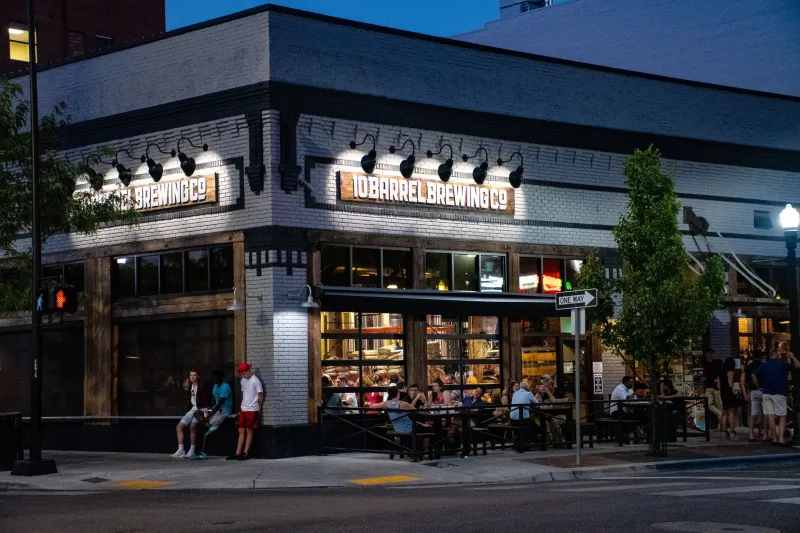
There's a version of a brewery that exists purely to sell beer. It opens at four, closes at ten, and minds its own business in between. That was never going to be us.
Roaring Fork Beer Co. grew up alongside this valley, and valleys like ours—mountain towns with tight housing markets, seasonal economies, and the particular emotional weather that comes from living somewhere so beautiful it sometimes breaks your heart—they have needs that go beyond a cold pour. Over the years, we've found ourselves in the middle of moments we never planned for. Fundraisers held on a Tuesday night because someone's house burned down. Doors propped open on a Wednesday afternoon because people needed somewhere to sit with their grief. Pints pulled for free because a crew of out-of-work ski instructors needed to feel like they still had a place in this town.
This is the story of some of those moments.
The Winter the Mountain Went Quiet
Anybody who's lived in a ski town knows what a bad winter looks like—not bad in the powder sense, but bad in the economic sense. A few years back, when a combination of early-season closures and a rough stretch of warm weather gutted the resort's operating calendar, the ripple effect hit fast. Seasonal workers who'd counted on a full season found themselves with half the hours and all the rent. Restaurants cut staff. Shops trimmed hours.
We didn't close. We couldn't justify it.
"I remember coming in just to have somewhere to go," says Marco, who'd been working ski patrol for three seasons before that year unraveled. "My apartment felt like a trap. The taproom felt like—I don't know—like proof that something was still running."
We started a tab system that winter, informal and entirely off the books, where regulars who were stretched thin could drink now and square up later. Some did. Some never could. We didn't chase it. The point was never the money.
A Fundraiser That Turned Into Something Bigger
When a fire tore through a cluster of employee housing units on the east end of the valley a few years back, about thirty people lost most of what they owned overnight. The Red Cross came. The community came. And within forty-eight hours, our taproom manager Delia had cleared the event space and put out word that we were hosting a benefit the following Friday.
What happened that night still gets talked about.
"We expected maybe a hundred people," Delia remembers. "We had three hundred and fifty. We ran out of every beer we had on tap by nine o'clock. People were buying flights just to donate the price of them. Someone brought a guitar. It turned into this thing."
We raised enough to cover two months of temporary housing for every displaced family. More than that, though, was what the night did for the people who'd lost everything. Several of them have told us since that the fundraiser was the first moment they stopped feeling like victims and started feeling like neighbors.
Isolation, and What a Barstool Can Do for It
The years when the whole country went quiet were strange everywhere, but they hit mountain towns with a particular sharpness. The second-home crowd vanished. The tourists evaporated. And the people who actually lived here year-round were left with each other—and not much space to be with each other.
When we were able to reopen our outdoor patio, we did it with a deliberateness that surprised even us. We spaced tables to follow the rules, but we also made a decision early on: nobody sits alone if they don't want to. Staff were quietly encouraged to check in, to introduce strangers, to keep the energy from curdling into isolation theater.
"I'm a widow," says Patricia, who's been coming to the taproom since we opened. "I live alone. During that stretch, this patio was the only place I saw human faces that weren't on a screen. Your bartender—I think his name was Cal—he remembered what I was drinking from the week before. That sounds small. It wasn't small."
It wasn't small to us either.
The Workers We Didn't Forget
One thing that doesn't get talked about enough in mountain town economics is what happens to the people who keep the hospitality industry running when that industry contracts. Line cooks, housekeepers, lift operators, shuttle drivers—when the big employers pull back, these folks fall through the cracks fast.
We've partnered twice now with local workforce nonprofits to host job fairs in our event space, connecting displaced hospitality workers with employers who are hiring. The first one drew about sixty people. The second drew closer to a hundred and twenty. We provided the space, the beer (at cost), and a few hours of our brewer's time to talk about what it looks like to pivot into the craft beverage industry.
Two people from that second event now work in our production facility.
Why This Is Just What You Do
We're not writing this to congratulate ourselves. Honestly, we debated whether to write it at all, because there's a version of this kind of story that feels self-serving, and that's the last thing we want.
But we've heard from enough people—locals who've been here through the hard seasons, newcomers who found their footing in part because our taproom was a soft place to land—that the story deserves to be told. Not as a marketing piece, but as a record. A reminder that a business can be more than a transaction, and that a taproom can be more than a place to drink.
The Roaring Fork Valley has given us everything. The water in our beer, the community that fills our seats, the landscape that makes people want to move here and stay here and fight for it. The least we can do is show up when it matters.
So that's what we'll keep doing. The light stays on.