Closed Doors, Open Taps: How We Rebuilt Roaring Fork Beer Co. From the Ground Up
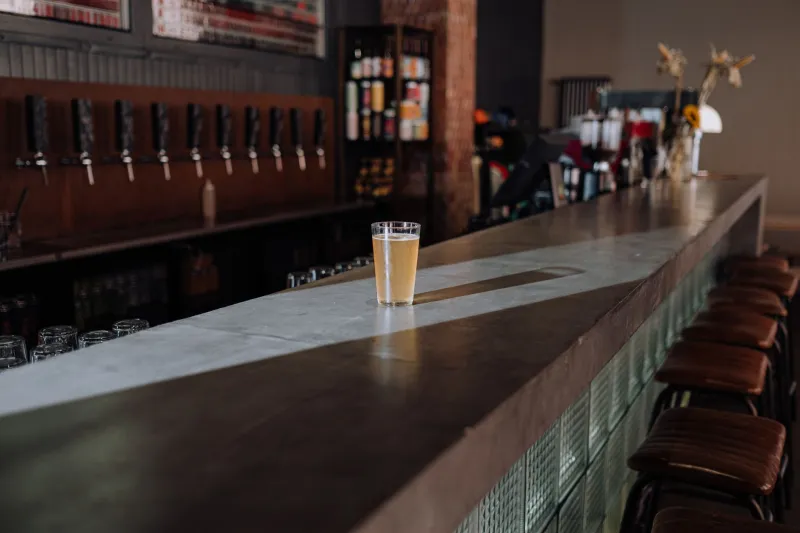
There's a particular kind of silence that settles over a taproom when nobody's in it. Not the peaceful quiet of early morning prep, before the first keg gets tapped and the music gets turned up. This was different. This was March 2020, and the chairs were up on the tables for reasons that had nothing to do with closing time.
Like every brewery in the country, we got hit fast. Colorado's stay-at-home orders landed before we'd had time to think through what they meant. One week we were pouring pints to packed barstools; the next, we were standing in a silent taproom trying to figure out how to keep the lights on—and more importantly, how to keep our people employed.
This is the story of what happened next. It's not a tidy comeback narrative, and we're not going to pretend it was. But it is a story about what a small independent brewery learns when everything it thought it knew gets stress-tested at altitude.
The First Pivot: Cans, Crowlers, and Curbside
Our taproom had always been the heartbeat of the operation. We'd built our identity around the experience of sitting in that space—the views, the conversation, the flights that turned strangers into regulars. Suddenly, none of that was available to us.
So we did what breweries across the country scrambled to do: we leaned hard into to-go. We expanded our crowler program almost overnight, added curbside pickup before most people even knew what curbside meant, and started canning beers that we'd previously only served on draft. That last part sounds simple. It wasn't.
Canning requires a totally different production rhythm than draft. Fill volumes, seaming pressures, DO pickup—there's real science involved in making sure a can of our Rocky Mountain Lager shows up in someone's fridge tasting the same as it does at the bar. We had to learn fast, make mistakes, and iterate. A few early batches were humbling. Most of what we figured out during that stretch is now baked into how we operate every single day.
Supply Chain Chaos and the Art of Improvisation
About six weeks into the shutdown, we ran headfirst into a problem that had nothing to do with public health mandates: we couldn't get cans. The aluminum shortage hit craft brewers hard, and we were competing with massive operations that had purchasing power we simply didn't have. Lead times stretched from weeks to months. Prices climbed.
That forced a conversation we probably should have had earlier. We started looking closer to home. Were there regional suppliers we'd overlooked? Were there ingredients we could source within Colorado that would reduce our exposure to national supply chain wobbles? The answer, in more cases than we expected, was yes.
Some of those relationships—with Colorado hop growers, local grain maltsters, regional packaging suppliers—are still active today. The pandemic didn't just teach us to improvise. It pushed us toward a more locally rooted supply chain that honestly makes our beer better and our business more resilient. Hard lesson, good outcome.
Keeping the Team Together
Here's the part that kept us up at night more than anything else: our people.
We had taproom staff whose entire livelihood depended on in-person service. When that went away, the question wasn't just operational—it was deeply personal. We made a decision early on that we were going to do everything we could to retain our core team, even when the math was terrifying. We restructured roles, shifted taproom staff into packaging and delivery, and applied for every relief program we could find.
Was it perfect? No. Were there painful moments? Absolutely. But the crew that came out the other side of 2020 with us is tighter and more cross-trained than any team we'd had before. People who used to only work front-of-house now understand the brewing process. Brewers who never thought about customer experience started thinking about it constantly. That cross-pollination of knowledge changed our culture in ways we're still benefiting from.
The Unexpected Gift: A Direct Connection With Our Community
Something strange happened during the worst of it. Without the taproom as a gathering place, we had to find other ways to stay connected to the people who'd been coming to see us for years. We started doing virtual beer tastings over Zoom—which felt a little awkward at first and then became genuinely fun. We launched a beer club that delivered curated mixed packs to local addresses. We wrote more, posted more, talked more openly about what was actually happening inside the brewery.
And people responded. Not just with purchases, though that mattered enormously. They responded with messages, with loyalty, with the kind of vocal support that reminded us why we got into this business in the first place. The Roaring Fork Valley has always felt like a community that shows up for the things it cares about. 2020 proved that in a way we'll never forget.
The beer club, by the way, is still running. Turns out people enjoy having good craft beer show up at their door on a regular basis, pandemic or not.
What Stuck, What Changed, What We'd Do Differently
Four-plus years of hindsight gives you some clarity. Here's what we'd tell another small brewery going through something similar:
Diversify before you have to. We were almost entirely taproom-dependent when the shutdown hit. Building out to-go, delivery, and retail channels under pressure is survivable—but doing it proactively is a lot smarter.
Know your supply chain two steps deep. It's not enough to know who your distributor is. Know where they source from. Know what happens when that chain breaks. We do now.
Your people are your brand. The brewers, the servers, the folks who load the delivery van at 6 a.m.—they're not overhead. They're the reason anyone gives a damn about your beer. Protect them like it.
Transparency builds trust faster than marketing. When we started being honest with our community about what we were going through, the response was immediate and warm. People don't want a polished press release. They want to know you're human.
The Brewery That Came Back
When we finally reopened the taproom for in-person service, it didn't feel like a return to normal. It felt like something new. The space was the same, the beer was the same—actually, better—but the operation behind it had been rebuilt piece by piece during one of the hardest stretches any of us had lived through professionally.
We're a more efficient brewery now. A more connected one. A more locally rooted one. None of that would have happened on the timeline it did without the pressure of 2020 forcing our hand.
We're not grateful for the pandemic. Nobody should be. But we are grateful for what it revealed about this brewery, this team, and this community. That's worth something. Pour one out for the hard years—they made us who we are.