Beautiful Disasters: Inside the Experimental Batches That Taught Us How to Brew Better Beer
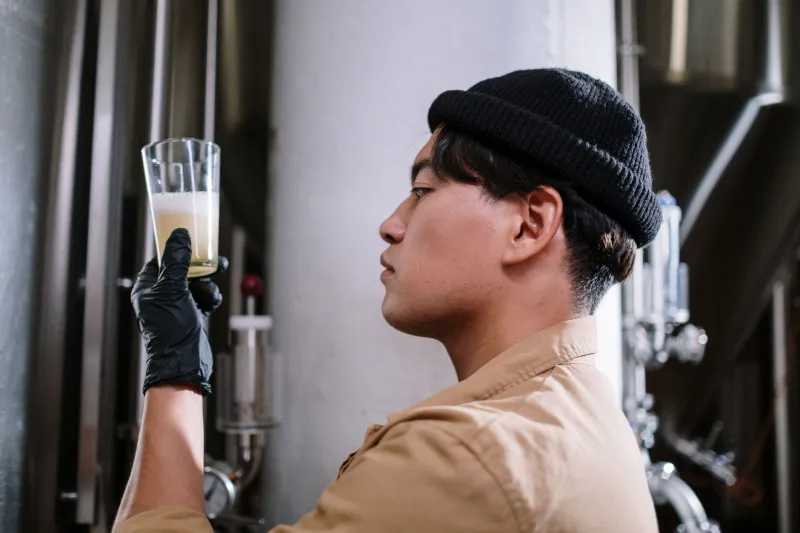
There's a version of craft brewing that exists mostly in marketing materials. Sunlit grain fields, confident brewers holding up perfect pints, tasting notes that read like love letters. It's a clean, photogenic story.
Then there's what actually happens in the brewery on a Tuesday afternoon when a dry-hop addition goes sideways, or a fermentation temperature swings unexpectedly, or a flavor combination that sounded genuinely inspired on paper turns out to taste like a mistake you'd rather not discuss publicly.
At Roaring Fork Beer Co., we've had both kinds of days. And honestly? The second kind has taught us more.
The Batch Nobody Talks About (Until Now)
A few years back, our brewing team got excited about a concept that felt genuinely original: a saison brewed with foraged juniper berries sourced from the hillsides above Carbondale, finished with a touch of local honey and a dry-hop addition of a then-experimental hop variety. On paper, it connected everything we love about brewing in the Rockies—wild, local, adventurous.
In the fermenter, it became something else entirely.
The juniper, which had smelled piney and bright when we crushed it, released a kind of medicinal bitterness during fermentation that no amount of honey could soften. The experimental hops, which were supposed to contribute a stone-fruit character, instead amplified the resinous edge until the whole thing tasted less like a saison and more like a very aggressive cough drop.
We dumped it. And then we sat down and talked about why for about two hours.
That conversation led directly to our current approach to foraged ingredients: small-scale test batches first, no exceptions, with a formal tasting panel before anything goes into a full production run. That failed juniper saison is why we have a process now. It earned its place in the brewery's history even without ever reaching a glass.
Why Failure Is a Feature, Not a Bug
Head brewer Marcus has a phrase he uses during R&D sessions: "The batch that doesn't work is still doing work." It sounds like the kind of thing you'd see on a motivational poster, but in the context of a brewery's experimental pipeline, it's genuinely true.
Every batch that goes wrong generates data. Maybe the mash temperature ran too high and the resulting body was cloyingly thick. Maybe a fruit addition introduced a wild yeast that took fermentation in a direction nobody planned for. Maybe the water chemistry—already a moving target at our elevation—interacted with a new grain bill in a way the calculations didn't predict.
None of that is wasted. It goes into the log, it gets discussed, and it shapes what happens next. Our brewing team keeps detailed records of every experimental batch, successful or not, specifically because the failures contain information the successes sometimes obscure.
The Accidental Discovery Problem
Not all experimental surprises are bad ones, and that creates its own kind of challenge.
A couple of winters ago, a batch of our amber ale experienced an unplanned temperature drop during fermentation—equipment issue, caught late. The result was a beer that had fermented more slowly than intended, with a flavor profile that was noticeably different from our standard version. Cleaner in some ways, with a subtle caramel note that the normal fermentation schedule didn't produce.
The team loved it. The question became: can we do that on purpose?
Replicating an accidental result is genuinely harder than it sounds. You have to reverse-engineer conditions you didn't intentionally create, control for variables you weren't tracking at the time, and accept that the thing you're chasing might be partly a product of circumstances you can't fully reproduce. We spent the better part of three months trying to recreate that cold-fermented amber before landing on something we felt confident putting on tap.
That experience changed how we think about documentation. If you're not writing it down in the moment, you can't reconstruct it later. Now every batch—experimental or standard—gets logged with more granularity than it used to.
The Flavor Combinations That Surprised Everyone
Some of the most instructive experiments aren't the ones that fail completely—they're the ones that fail in unexpected directions and reveal something useful in the process.
We once tried a smoked wheat beer using Colorado-sourced malt that had been lightly smoked over cherry wood. The smoke character was supposed to be subtle, a background note in what was otherwise a clean, refreshing wheat. Instead, the cherry-wood smoke interacted with the wheat's natural esters to produce a flavor that one of our brewers described, accurately, as "a campfire s'more that somehow also tastes like a banana."
It was strange. It was not what we were making. But it was interesting enough that we wrote it up and filed it under "revisit when the concept fits." That note is still in the log. We haven't found the right moment for a campfire s'more wheat yet, but we haven't ruled it out either.
What the R&D Process Actually Looks Like
People sometimes imagine brewery R&D as a glamorous, free-wheeling creative exercise. In reality, it involves a lot of spreadsheets.
Our experimental batches typically start with a formal proposal—a written rationale for why this combination of ingredients, this process variation, or this style exploration is worth the time and raw materials. That proposal goes through an informal review before anything gets brewed, which catches the ideas that sound exciting at 9 p.m. and look questionable in the morning.
Batches that make it past the proposal stage get brewed at small scale, evaluated blind by the team, and scored against specific criteria: flavor, aroma, mouthfeel, and—critically—whether this beer has a place in the taproom or if it's a learning exercise that belongs in the log rather than on the menu.
That last question is harder than it sounds. There's always a temptation to find a home for something you worked hard on, even when the honest answer is that it's not ready, or not right, or just not good enough yet. Resisting that temptation is one of the disciplines that separates a brewery with a consistent reputation from one that puts everything on tap and hopes for the best.
The Beer That Almost Was
For every beer on our current menu, there are two or three that didn't make it. Some are shelved temporarily, waiting for the right season or the right ingredients. Some are retired permanently, with their lessons absorbed into the recipes that did work.
And a few are still in the log as open questions—flavor combinations or process ideas that we haven't solved yet but haven't given up on either. That's where a lot of the most interesting brewing lives: not in the finished product, but in the ongoing conversation between what we're trying to make and what the beer is willing to become.
The taproom you walk into is the polished version of that story. But the real story is in the batches nobody sees—the ones that taught us, challenged us, and occasionally humbled us into becoming better brewers.