Hops, Housing, and Hillsides: What Craft Beer Is Doing to Mountain Town Real Estate
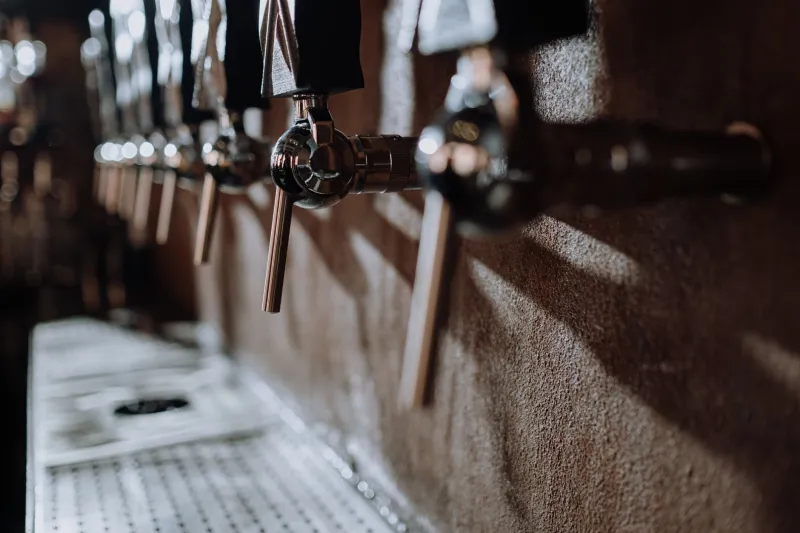
There's a joke that goes around real estate circles in mountain towns: the surest sign a neighborhood is about to get expensive isn't a Whole Foods or a yoga studio — it's a craft brewery. People laugh, but the data increasingly backs it up. And in the Roaring Fork Valley, where we've watched our own community evolve over the years, that punchline lands a little closer to home than most.
We're not in the business of selling houses. We're in the business of making beer. But when the place you love starts changing around you — when longtime locals start talking about affordability and newcomers mention your taproom as one of the reasons they moved here — it feels worth sitting down and actually thinking through what's happening.
The Anchor Effect: Why Breweries Are More Than a Drink Stop
Urban planners have a term for businesses that draw foot traffic, stabilize neighborhoods, and attract secondary development: anchors. For decades, that word belonged to grocery stores and big-box retailers. In mountain towns, the anchor calculus looks different.
A craft brewery isn't just somewhere to grab a pint. It's a gathering place, an informal job board, a venue, a local landmark. It signals — loudly — that a community has a certain kind of creative, independent energy. And that signal travels. It shows up in travel media. It gets tagged on Instagram. It ends up in the relocation guides that remote workers and retirees browse when they're deciding where to plant their next chapter.
"When I was showing properties in this valley five years ago, people asked about schools and commute times," says one local real estate agent who's been working the corridor between Glenwood Springs and Aspen for over a decade. "Now I get asked about the food scene, the outdoor access, and honestly? Whether there's a good local brewery. That question comes up more than people might think."
New Arrivals and the Brewery as a Compass
The pandemic reshuffled where Americans want to live in ways that are still sorting themselves out. Remote work untethered millions of people from specific zip codes, and a significant chunk of them looked west. Mountain towns — already under pressure from ski resort economies and second-home demand — found themselves fielding a new wave of interest from buyers who wanted scenery, authenticity, and a sense of place.
Craft breweries, it turns out, are a shorthand for that last quality. They're locally owned. They use regional ingredients. They host community events. They feel like the opposite of a chain, which is exactly what a certain kind of transplant is looking for.
Take Marcus, a software engineer who relocated from Austin to the valley two years ago. He's quick to admit the mountains were the main draw, but he also remembers doing a "vibe check" weekend before committing to the move. "I wanted to see if there was a real community here or if it was just vacation rentals and tourist shops," he says. "The brewery scene was a big part of what convinced me it was the real thing. You could tell people actually lived here and gathered here."
He's not alone. Anecdotally — and increasingly in survey data from regional economic development offices — craft breweries rank consistently high among the lifestyle amenities that influence relocation decisions for the 30-to-55 demographic. That's a cohort with spending power, and their arrival has consequences.
The Double-Edged Pour
Here's where it gets complicated, and where we'd be doing this community a disservice if we glossed over it.
The same vitality that makes a place like the Roaring Fork Valley attractive — the independent businesses, the outdoor culture, the tight-knit local character — is precisely what gets squeezed when too much outside money arrives too fast. Property values rise. Rents follow. The service industry workers, the artists, the people who actually built the community's character in the first place find themselves priced out of the very neighborhoods they animated.
Breweries, however unintentionally, can be part of that cycle. We bring visibility. Visibility brings interest. Interest brings capital. Capital changes things.
"I love what the local brewery scene has done for this town's identity," says a longtime Carbondale resident who's watched the valley transform over two decades. "But I also know three families who've moved to Parachute or Rifle because they couldn't afford to stay. That's not nothing. That's people."
It's a tension that doesn't resolve neatly, and anyone who tells you otherwise is selling something. The honest position is that economic vitality and affordability are genuinely hard to hold in balance, and small businesses — including breweries — exist inside that tension rather than above it.
What Responsible Anchoring Looks Like
Some breweries around the Mountain West are starting to think more deliberately about their role as community anchors, and what that responsibility actually demands. That means things like paying living wages, sourcing locally in ways that keep money circulating in the regional economy, partnering with housing advocacy groups, and using their platform to amplify conversations about affordability and community preservation.
It also means being honest in how they market themselves. There's a difference between celebrating a place and commodifying it — between inviting people to experience a community and packaging that community as a lifestyle product for the highest bidder.
At Roaring Fork Beer Co., we think about this more than our tap handles might suggest. The valley isn't a backdrop for our brand. It's the reason we exist. The water in our lagers, the barley from down-valley farms, the faces of regulars who've been coming since we first cracked open the doors — that's not atmosphere. That's the actual thing.
A Town That Stays Itself
The best version of what craft beer tourism can do for a mountain community isn't the version where property values spike and the original residents scatter. It's the version where a brewery becomes genuinely embedded in the life of a place — where it's a resource for locals first and a destination for visitors second.
That requires intention. It requires local governments thinking carefully about short-term rental policy, workforce housing, and what kinds of development they actually want to incentivize. It requires businesses, including us, being willing to be part of those conversations even when they're uncomfortable.
The Roaring Fork Valley has something rare: a genuine sense of place that people feel the moment they arrive. Keeping that intact while the world keeps discovering it is the real challenge. Craft beer didn't create that challenge, but it's become one of its most visible symbols.
We'll keep brewing. We'll keep pouring. And we'll keep paying attention to what's happening in the community around us — because a great pint doesn't mean much if the town it came from stops being worth coming home to.