Cooking with Craft: The Roaring Fork Valley Chefs Who Put Our Beer on the Menu
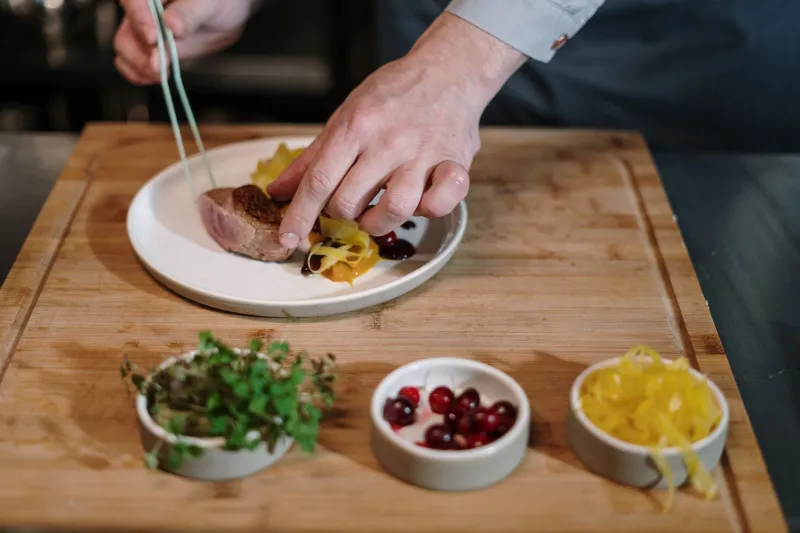
Most people think about craft beer as something you drink. But talk to the right chef, and you'll quickly learn it's also one of the most versatile ingredients in the kitchen. Beer has been used in cooking for centuries — beer-braised meats, yeasty bread doughs, malt-spiked sauces — but the explosion of craft brewing over the past two decades has given cooks something they never had before: a pantry full of wildly different flavor profiles, all in a can or bottle.
In the Roaring Fork Valley, a handful of restaurants have built that pantry around us. We're not complaining.
We hit the road and visited five local spots that are doing genuinely creative things with Roaring Fork Beer Co. brews. What we found was a tight-knit community of cooks who care deeply about local sourcing, flavor-driven cooking, and the kind of collaboration that makes a regional food scene feel alive.
Why Chefs Are Reaching for the Growler
Before we get into the individual restaurants, it's worth understanding why craft beer works so well in the kitchen in the first place.
Beer brings a few things to a dish that other liquids don't. Carbonation tenderizes proteins. Hops add bitterness that balances sweetness and fat. Malt contributes depth and body to sauces and braises. And yeast-forward beers like hefeweizens or saisons carry aromatic complexity that wine can sometimes lack at the price points most kitchens work with.
Our head brewer Marcus Webb puts it plainly: "Every beer we make is essentially a collection of flavors. When a chef uses one of our beers in a recipe, they're borrowing all of that work we put into the fermentation tank. It's flattering, honestly."
The Watershed Kitchen: Beer-Braised Short Rib That Stops Conversations
The Watershed Kitchen in Basalt has been a valley staple for years, and chef-owner Sofia Reyes has been quietly incorporating Roaring Fork beers into her menu for the past two seasons. Her standout dish: a twelve-hour braised short rib that uses our Elk Creek Amber as the braising liquid.
"The amber has this caramel quality that gets even richer when you reduce it," Sofia explains. "By the time the braise is done, the sauce has this incredible depth — you can't quite identify it, but it makes everything taste more complete."
She serves it over creamy polenta with a gremolata that cuts through the richness. The dish has become one of her best sellers between October and March, and she goes through a significant amount of Elk Creek Amber to keep up with demand.
Aspen Provisions: Beer-Battered Everything, Done Right
Up in Aspen, chef Marco Delgado runs Aspen Provisions, a casual spot known for its elevated bar food and obsessive sourcing. Marco uses our Crystal River IPA in his beer batter, and the results speak for themselves.
"Most beer batters use something light and neutral because people are afraid the hops will make things bitter," Marco says. "But if you balance the batter correctly — a little sugar, the right flour ratio — the IPA actually adds this floral, citrusy note that makes the whole thing taste fresher."
His IPA-battered onion rings have developed a cult following. He also uses the same batter for fish and chips, and recently started experimenting with beer-battered avocado for a vegetarian option that's been getting attention.
Carbondale Cookhouse: Bread That Proves Beer Is Yeast, Too
Not every application is a braise or a batter. At Carbondale Cookhouse, baker and co-owner Priya Nair uses our Maroon Bells Pilsner in her house bread dough — and the results are subtle but unmistakable.
"Beer is basically liquid yeast and grain," Priya says. "When I swap some of the water in my dough for pilsner, I get a slightly more complex crumb, a little more activity in the fermentation, and this faint nuttiness in the crust that I can't get any other way."
The bread is served with every table as a complimentary starter, which means nearly every guest at Carbondale Cookhouse is eating Roaring Fork beer without realizing it. Priya is fine with that. "The best ingredient is the one people can't identify but can't stop eating."
Rifle River Grill: A Dessert You Didn't See Coming
Down in Rifle, chef and pastry specialist James Ochoa at Rifle River Grill has taken the most unexpected approach of the bunch: he uses our Snowmass Stout in desserts.
His stout chocolate cake has been on the menu for three years running, and it's not going anywhere. "The stout adds moisture and a roasted bitterness that keeps the cake from tasting too sweet," James explains. "It's the difference between a chocolate cake and a chocolate cake that makes you want another slice."
He also makes a stout caramel sauce that goes over vanilla ice cream and a stout-spiked whipped cream that appears on several other desserts. James is evangelical about the combination. "Anyone who thinks beer is just for drinking hasn't had it in a proper ganache."
Glenwood Galley: The Beer Dinner Collaboration
Our favorite ongoing partnership might be with Glenwood Galley in Glenwood Springs, where chef and owner Tasha Moreau hosts a quarterly beer dinner built entirely around a rotating selection of Roaring Fork beers. Each course is designed around a specific beer, and Marcus often comes out to talk through the brewing process with guests.
"It started as a one-time thing and turned into something people plan their calendars around," Tasha says. "There's something about pairing beer with serious food in a formal dinner setting that changes how people think about craft brewing."
The dinners typically run five courses, each paired with a different Roaring Fork beer, with a theme that shifts seasonally. The fall edition leans heavily on game meats and root vegetables. The spring version celebrates foraged ingredients and lighter brews. Every seat sells out.
What This Means for the Valley
There's a bigger story here beyond individual dishes. When local breweries and restaurants build real relationships — not just vendor-customer transactions, but genuine creative partnerships — the whole regional food scene gets stronger. Chefs have an ingredient they trust and understand. Brewers get feedback from people who taste flavor for a living. And diners get food and drink that feels rooted in the place they're visiting.
The Roaring Fork Valley has always had a strong culinary identity. Proximity to incredible produce, a culture of outdoor living that makes people hungry and thirsty in equal measure, and a community that shows up for local businesses. What's happening now is that craft beer is becoming a genuine part of that identity — not just on the bar menu, but in the kitchen, on the plate, and at the table.
We're proud to be part of it. And we're always looking for the next collaboration.
If you're a chef in the valley and want to talk about what our beers might do in your kitchen, reach out. We love this kind of conversation.