Brewing at the Top of the World: How 8,000 Feet Changes Everything in the Glass
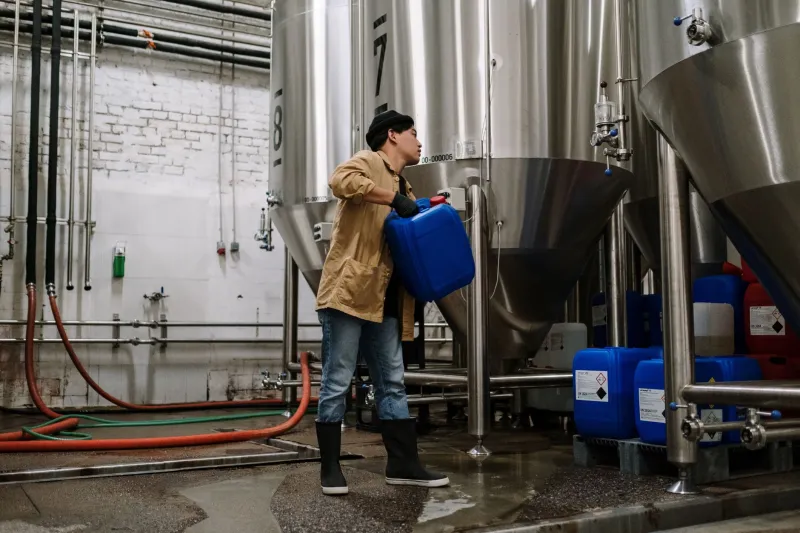
There's a reason people say Colorado beer just hits different. Part of it is the mountain air, sure. Part of it is the vibe of cracking a can on a trailhead or settling into a barstool after a long powder day. But a surprisingly big part of it is pure, unromantic science—and here at Roaring Fork Beer Co., we've spent years figuring out how to make that science work in our favor.
Brewing at elevation isn't a novelty. It's a daily negotiation between physics, chemistry, and a whole lot of hard-won experience.
What Actually Happens When You Brew at Altitude
Let's start with the basics. At elevations above 8,000 feet—which is right in our wheelhouse along the Roaring Fork Valley—water boils at roughly 197°F instead of the sea-level standard of 212°F. That 15-degree difference might not sound like much, but in a brewhouse, it's enormous.
"When I first moved here from a brewery in Chicago, I thought I could just run the same recipes and call it a day," laughs Marcus Delray, our head brewer and a Colorado transplant with nearly two decades of experience. "The first batch was a mess. The hop isomerization was way off, the malt character was thin, and the fermentation went sideways faster than I expected. Altitude humbles you pretty quickly."
Hop isomerization—the process by which hops release their bittering compounds during the boil—requires sustained heat over time. At lower boiling temperatures, brewers have to compensate by extending boil times, adjusting hop additions, or rethinking the timing of when certain hops go into the kettle. At Roaring Fork, we've dialed in extended 90-minute boils for most of our hop-forward styles, and Marcus has built custom hop addition schedules that account for the reduced thermal efficiency.
Oxygen, Yeast, and the Altitude Factor
Beyond the boil, altitude affects oxygen availability in ways that directly impact yeast performance. Lower atmospheric pressure means less dissolved oxygen in the wort before fermentation begins—and yeast, it turns out, is pretty picky about its environment.
"Yeast needs oxygen in those early hours to build healthy cell walls," Marcus explains. "At sea level, you can get away with a standard inline oxygenation setup. Up here, we've had to upgrade our oxygenation systems significantly and monitor dissolved oxygen levels way more closely than most breweries would ever bother with."
Under-oxygenated wort can lead to sluggish fermentation, off-flavors like acetaldehyde (that green apple taste nobody wants in their IPA), and inconsistent attenuation. We've invested in precision oxygenation equipment and we pitch slightly higher yeast cell counts than a comparable sea-level operation would use for the same batch size. It adds cost and complexity, but the result is clean, consistent fermentation—batch after batch.
Interestingly, the lower atmospheric pressure also means that carbonation behaves differently during and after fermentation. CO2 escapes from the fermenting beer more readily at altitude, which affects how we manage pressure in our fermenters and how we approach force carbonation in our serving tanks. What feels like a perfectly carbonated beer at 8,000 feet might taste slightly flat if you shipped it down to Denver without adjusting the carb levels.
Rocky Mountain Water: A Secret Weapon
Here's where things get genuinely exciting. The snowmelt-fed water sources of the Roaring Fork Valley are among the softest, purest water profiles in the entire country. Low in minerals, low in chlorine, and exceptionally clean, our source water is basically a blank canvas for brewing.
"Most breweries spend a lot of time stripping minerals out of their water to start fresh," Marcus says. "We start closer to that blank slate naturally, which gives us incredible flexibility. We can build up the mineral profile we want for any given style—sulfates for a dry, snappy IPA, chloride for a soft and round stout—without fighting against what's already there."
Compare that to breweries in places like Denver or Colorado Springs, where municipal water carries more mineral load, or coastal operations dealing with higher sodium levels. Our water chemistry is genuinely one of our biggest competitive advantages, and it's something we work hard to protect and leverage with every recipe we develop.
Adapting Recipes for the Rockies
So what does all of this look like in practice? A few specific adaptations have become standard operating procedure in our brewhouse:
Extended boil times for most styles ensure proper hop utilization and adequate wort concentration despite the lower boiling temperature. For our flagship Confluence Pale Ale, Marcus runs a 95-minute boil—about 25 minutes longer than the same recipe would require at sea level.
Custom yeast management includes higher pitch rates, aggressive oxygenation protocols, and careful temperature control during the first 24 hours of fermentation. We keep a close eye on yeast health metrics that some smaller operations might overlook entirely.
Recipe calibration for mouthfeel and body is another area where altitude demands attention. The reduced boil efficiency can leave beers tasting thin if you're not careful, so we often adjust our grain bills upward and lean into specialty malts that add body and residual sweetness.
Carbonation dialing happens at two stages—during conditioning and at the point of packaging—to make sure every pint poured in our taproom hits the right level of effervescence without over- or under-shooting.
Why It's Worth Every Extra Step
You might be wondering why any brewery would voluntarily set up shop somewhere that makes the job this much harder. Fair question. But ask Marcus, and he'll give you the same answer every time.
"The challenge is what makes it interesting," he says. "And honestly, I think the beer is better for it. We can't be lazy. Every batch forces us to be intentional. And when you're working with water this clean, air this clear, and ingredients from farms just down the valley, the extra effort pays off in ways you can taste."
We'd like to think he's right. Come by the taproom and judge for yourself—there's no better place to test the theory than with a cold pint in hand and the Elk Mountains framing the view out the window.