What's In the Water? The Science Behind Roaring Fork's Distinctly Rocky Mountain Beer
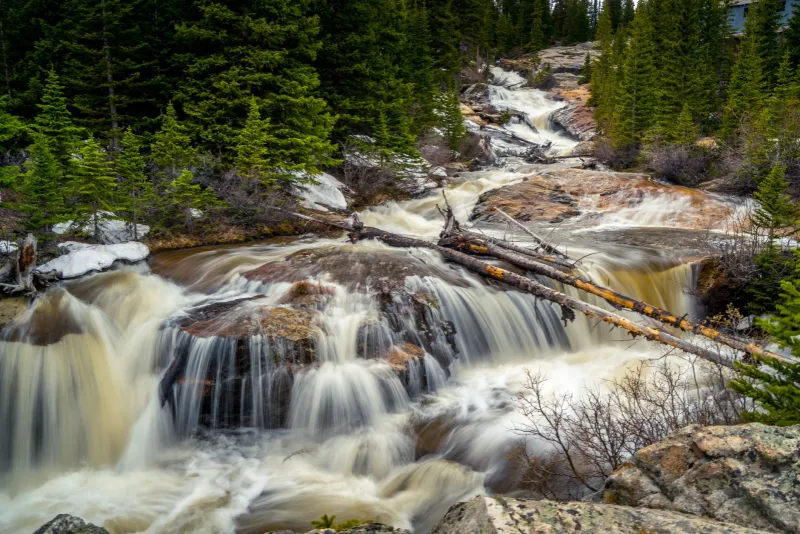
Ask most people what makes a great craft beer and they'll talk about hops, malt, or yeast. Rarely does anyone point to the stuff coming out of the tap before the brewing even begins. But here at Roaring Fork Beer Co., water isn't an afterthought — it's the foundation. The snowmelt and spring water that filters down through granite and limestone above the Roaring Fork Valley carries a mineral signature unlike anything you'd find in Denver, Chicago, or Portland. And that signature ends up in your glass.
We sat down with our head brewer, Marcus Delgado, to talk water chemistry — what we test for, what we find, and how we've built our entire beer lineup around what the mountains naturally give us.
Starting with Snowpack
The Roaring Fork River originates near the Continental Divide, fed by snowmelt from peaks that top out above 12,000 feet. By the time that water winds its way down through the valley and eventually into our brewing system, it's been on a long journey through some of the most geologically diverse terrain in Colorado.
"High-altitude snowmelt tends to be incredibly soft," Marcus explains, leaning against the bright copper of our brew kettle. "It hasn't had the time or the contact with enough mineral-dense rock to pick up a lot of dissolved solids. So what we're working with is water that's almost like a blank canvas — very low in calcium, magnesium, sulfates, and chlorides compared to, say, water from a limestone-heavy region."
For reference, the water profile we pull from our source typically shows calcium levels around 25–40 parts per million, with sulfate and chloride both sitting well below 50 ppm. Compare that to the famously hard water of Burton-on-Trent in England — where calcium levels can exceed 300 ppm and sulfates push past 600 ppm — and you start to understand why the beers brewed in that tradition taste so different from what comes out of our tanks.
What Soft Water Actually Does to Beer
Softness in water isn't a flaw. It's a characteristic, and it shapes flavor in ways that are subtle but unmistakable once you know what to look for.
High-sulfate water amplifies hop bitterness, making it sharper and more aggressive — great for a classic English bitter or a West Coast IPA built on resin and bite. High-chloride water, on the other hand, rounds out malt sweetness and gives beer a fuller, rounder body. Soft water, like ours, sits somewhere more neutral. It doesn't push the beer in either direction by default.
"That neutrality is actually a gift," Marcus says. "It means we have more control. We can add minerals where we need them rather than fighting against a profile that's already loaded with something we don't want."
For our lighter lagers and wheat ales, Marcus often lets the naturally soft water do the heavy lifting, keeping the mouthfeel clean and the finish crisp. "You get this really delicate, almost Alpine quality to the beer," he notes. "It's refreshing in a way that's hard to replicate if you're starting with hard water and trying to strip it back."
Testing, Adjusting, and Getting It Right
Just because the water starts soft doesn't mean Marcus leaves it untouched. Every batch begins with a fresh water analysis — pH, total dissolved solids, calcium, magnesium, sodium, sulfate, and chloride all get logged before a single pound of grain hits the mash tun.
"Consistency is the goal," he says. "Snowpack levels change season to season. Spring runoff can shift the mineral content slightly. We test every time because we want every batch of our flagship Pale Ale to taste exactly like the last one."
When he's brewing something that benefits from more mineral presence — our dry-hopped IPAs, for instance, or our seasonal German-style Märzen — Marcus will add small, precise amounts of gypsum (calcium sulfate) or calcium chloride to nudge the water profile toward something more historically appropriate for the style.
"I think of it like seasoning food," he explains. "The base water is your broth. Sometimes it's perfect as-is. Sometimes you add a little salt. You just want to do it intentionally."
Why Historical Styles Look Different Here
One of the more fascinating outcomes of brewing with soft Rocky Mountain water is what happens when you try to recreate classic Old World styles. A traditional Czech Pilsner, famously brewed in Pilsen with some of the softest water in Europe, actually translates beautifully here. Our version — brewed with Saaz hops and a long cold lagering period — has a delicate, floral bitterness and a smooth finish that feels completely at home with the local water chemistry.
An English-style IPA, however, requires more work. The style was built around Burton water, and without that sulfate backbone, the hops can come across as softer and less defined than tradition demands. Marcus compensates by adjusting mineral additions carefully and selecting hop varieties that express well even in lower-sulfate environments.
"You learn to respect what the water wants to do," he says. "The mountains have their own opinion, and sometimes the best beers we make are the ones where we just listened."
The Terroir of the Tap
Winemakers have talked about terroir — the idea that geography, climate, and soil express themselves in the bottle — for centuries. Craft brewers are increasingly borrowing that language, and honestly, it fits.
When you drink a Roaring Fork beer, you're tasting water that fell as snow somewhere above Aspen, filtered through granite for months or years, and eventually made its way into a brewing process designed specifically around its character. That's not marketing language. That's geology.
"I genuinely believe our water makes beers that you can't quite replicate anywhere else," Marcus says, filling a sample glass and holding it up to the light. "And I think that's worth celebrating."
Next time you're at the taproom, ask for a glass of water alongside your pint. Taste them side by side. It's the same source — one just went through a little more magic on the way to your hand.