More Than a Pint: How a Craft Brewery Quietly Rewired a Mountain Town's Economy
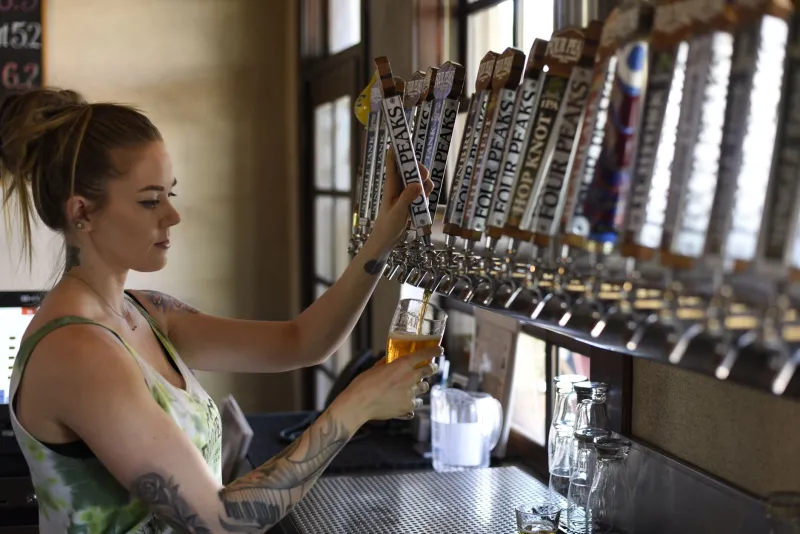
Nobody opens a brewery thinking they're going to save a town. You think about grain bills and fermentation temps and whether your IPA is going to land right. But ask the shop owners, restaurateurs, and tourism directors operating in the shadow of the Roaring Fork Valley, and a different story emerges — one where a taproom becomes a turning point.
Roaring Fork Beer Co. didn't set out to be an economic engine. It set out to make honest, craft beer rooted in the Rocky Mountain landscape it calls home. What happened next was, in many ways, an accident of authenticity.
The Anchor Effect
Economists who study small-town retail have a term for it: the anchor effect. Drop one compelling destination into a commercial corridor, and foot traffic rises for everyone around it. Think of it like gravity — the bigger the pull, the wider the orbit.
Talk to the owner of a gift shop two blocks from our taproom, and she'll tell you she noticed the shift almost immediately after we opened. "Weekend afternoons used to be quiet," she says. "Now I'm restocking shelves on Sunday nights because people who came in for a beer walked past my window and came in."
That pattern repeats itself across the valley. A neighboring coffee roaster reports that a significant chunk of their new wholesale accounts came through introductions made in our taproom. A local outfitter says that out-of-town visitors who found us on a brewery travel blog ended up booking multi-day guided trips. The connective tissue between these businesses isn't a chamber of commerce initiative — it's a shared pint.
Tourism You Can Taste
Craft beer tourism is one of the fastest-growing niches in American travel. According to the Brewers Association, roughly one-third of American adults who drink beer say that visiting a brewery is a meaningful part of how they plan a trip. In mountain communities that have historically depended on ski season to carry the whole year, that's a significant opportunity.
Roaring Fork Beer Co. draws visitors in months that used to be shoulder-season dead zones. The taproom becomes a reason to come in October, in May, in the awkward weeks between peak ski and peak hiking. And when those visitors arrive for the beer, they stay for dinner, they book a night at a local inn, they pick up a jar of local honey on the way out of town.
The Roaring Fork Valley's tourism office has noted a measurable uptick in what they call "experience-driven" weekend visitors — travelers who aren't chasing a specific mountain or trail but are drawn by the region's growing identity as a place with genuine culture and craft. A brewery that brews with local water and local grain and tells that story well becomes part of a destination's brand in a way that no marketing campaign can fully manufacture.
A Multiplier, Not Just a Venue
The economic impact of a craft brewery isn't limited to what happens inside it. Every barrel we brew requires raw materials — hops, malt, adjuncts — and wherever we can source those locally, we do. That means real money flowing to Colorado farmers and regional suppliers rather than out-of-state commodity markets.
We've written before about the farmers who help us build our seasonal beers. But the relationship isn't just philosophical. When we commit to buying a season's worth of locally grown barley or Colorado-harvested honey, we're offering a small farm a contract they can plan around. That kind of reliable, craft-scale demand has helped at least two producers in our network expand their operations in the last few years.
Multiply that across the dozens of independent breweries doing similar work in rural communities across the Mountain West, and you start to see something that looks less like a beverage industry and more like a regional food economy taking shape.
Property Values and the "Cool Factor"
It sounds crass to talk about property values in the same breath as community-building, but the data is hard to ignore. Research from the National Bureau of Economic Research and various urban planning studies has found that craft breweries correlate with rising property values in their immediate vicinity — particularly in neighborhoods or towns that were previously underperforming.
The mechanism isn't mysterious. Breweries signal investment. They signal that someone believed in a place enough to plant roots, build something, and invite people in. They attract a demographic that tends to spend locally, support other small businesses, and stick around. That kind of social and economic momentum is exactly what rural communities struggling with population decline and commercial vacancy have been trying to generate for decades.
We're not taking credit for the Roaring Fork Valley's vitality — this is a place that has always had something special going for it. But we'd like to think we've added a layer to it. A reason to linger. A place that feels like it belongs here.
What Other Breweries Are Proving Across Rural America
Roaring Fork is part of a larger national story. From the small towns of Vermont to the high desert of New Mexico to the old mill towns of the Carolinas, craft breweries have become unlikely anchors for rural economic revival. They're often among the first businesses to take a chance on a struggling main street, and their success tends to invite others to follow.
A study by the American Independent Business Alliance found that locally owned businesses recirculate a significantly higher percentage of revenue back into their local economy compared to chain establishments — sometimes more than three times as much. A craft brewery that sources locally, hires locally, and keeps its profits in the community is, almost by definition, a more powerful economic tool than a national chain restaurant or a big-box retailer.
That's not a knock on anyone. It's just math.
The Intangible Stuff
And then there's everything that doesn't show up in an economic report. The sense of pride a community feels when it has something worth showing off to visitors. The way a taproom becomes a venue for local musicians, a gathering spot after a town council meeting, a place where someone new to the valley starts to feel like they belong.
We've watched strangers become regulars and regulars become friends and friends become the kind of neighbors who show up when you need them. That's not something you can put a dollar figure on. But ask any small business owner in a town that's been revitalized by a brewery, and they'll tell you it's the part that matters most.
The beer is the beginning. Everything else is what happens when a place starts to believe in itself again.